Where our first class in the Kennesaw State University’s Executive MBA for Families in Business program held its first class reunion.
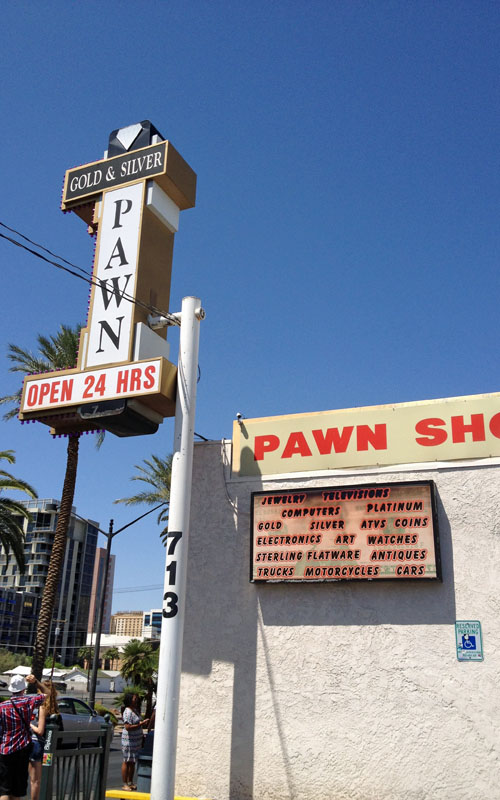
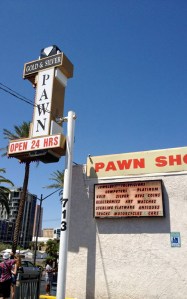 There was a time, of course, when Vegas was a sort of family business. Nowadays, it’s gone corporate. However, there are still some very well known family businesses in the place (left).
We stayed in The Venetian (owned by the Las Vegas Sands Corp.) and in Caesar’s Palace (Caesar’s Entertainment Corp. formerly Harrah’s).
There was a big convention in town, so I sucked up the $339/night price for a room overlooking the parking garage at Caesar’s for Sunday and Monday (ordinarily cheap nights). But on top of that, they wanted, and got, $14.99/day for wireless-only Internet access and asked for, but didn’t get, $25 to use the fitness center for half an hour — I run on the Strip but needed some exercise equipment. There was a Keurig machine in the room — a nice touch for a luxury hotel, I thought, until I saw that they wanted $12 for 4 K-cups. Fortunately a nearby Walgreens had 12-packs for $8.99.
As you can probably tell, I preferred the Venetian, but if you’re in that price range, I would still recommend the grand old lady of the Strip, the Bellagio.
Something about a town where you can step out the main entrance of a 5-star hotel at 4 am to be greeted by a hoard of limos disgorging barely-21s in short skirts and in deep nausea (use your imagination). Nice change from Sun City, but I’m glad to be back with the herons, gators, and noseeums.
The problem with Vegas has always been getting from casino to casino. There are now pedestrian overpasses on the west side from Treasure Island to Mandalay Bay, so walking isn’t as suicidal as it once was. On the east side, there’s still the Monorail ($5/ride or $9/day online), which doesn’t go to the airport, any Strip hotel on the east side north of Harrah’s, or any hotel on the west side at all.
McCarran is still a mess, but it’s getting better. Only about 30 minutes in the security line (Tuesday morning at 10:30 am). The TSA folks were working their butts off, but the airport is what it is. I don’t know who McCarran was, but they must really have hated him/her.
Oh, yes … the class reunion was fantastic. You always wonder if business students really get things like Boyd’s strategy (our program uses Boyd’s framework as our strategic foundation), but from the results they’re showing since they graduated, I feel good about it.
If you want to learn more (and managers in non-family businesses can attend on a space-available basis), please contact the Cox Family Enterprise Center, http://www.kennesaw.edu/fec/




You must be logged in to post a comment.