
This post publishes a comment by LtCol Hiro Katsura, Japanese Ground Self-Defense Force. Colonel Katsura is completing a Ph.D. dissertation that focuses on the internalization of mission command in the U.S. Marine Corps, particularly examining how competence is cultivated among NCOs who are expected to operate with delegated authority.
[Editor’s note: This is a follow-up to my post on the Soviet invasion of Manchuria in August 1945.]
As you mentioned, this campaign is an extremely important case study in strategic history.
The surprise attack at midnight on 9 August caught the Kwantung Army completely off guard. This was the result of several overlapping factors: the inability to anticipate the Soviet redeployment of mechanized forces across more than 9,000 km from Europe in only three months; Japan’s continued hope that the USSR might mediate a conditional peace settlement; and the simultaneous three-front offensive, which created defensive chaos—further compounded by inadequate communications.
At the time, the Kwantung Army still had over 700,000 men on paper, but most of its elite units and equipment had already been siphoned off to the Pacific. What remained was qualitatively weakened: undertrained troops, shortages of ammunition and fuel, and outdated armor—mainly Type 95 light tanks with 37mm guns, plus a handful of Type 98s. These conditions greatly amplified the effect of the Soviet surprise. Even so, the discipline of the Japanese Army is striking—reports say that even after the commander announced Japan’s defeat and the order to disarm, many officers and staff still argued for continued resistance.
Taken together, this explains why Boyd described the Soviets as moving inside Japan’s OODA loop. It was not only a matter of operational tempo, but also a fatal mismatch between Japanese perceptions and reality, which paralyzed decision-making.
I am reminded of a lecture I once attended in Tokyo by David Glantz.* He also described the Manchurian operation as a classic Soviet blitzkrieg. One anecdote he shared was particularly memorable: the name “August Storm” came from an offhand comment by his eight-year-old daughter at the dinner table. Years later, one of his former students—by then a SAMS graduate and a planner for the Gulf War—remembered that story and suggested the name Desert Storm. Glantz laughed that the true origin traced back to a little girl’s imagination—a curious thread in the tapestry of military history.
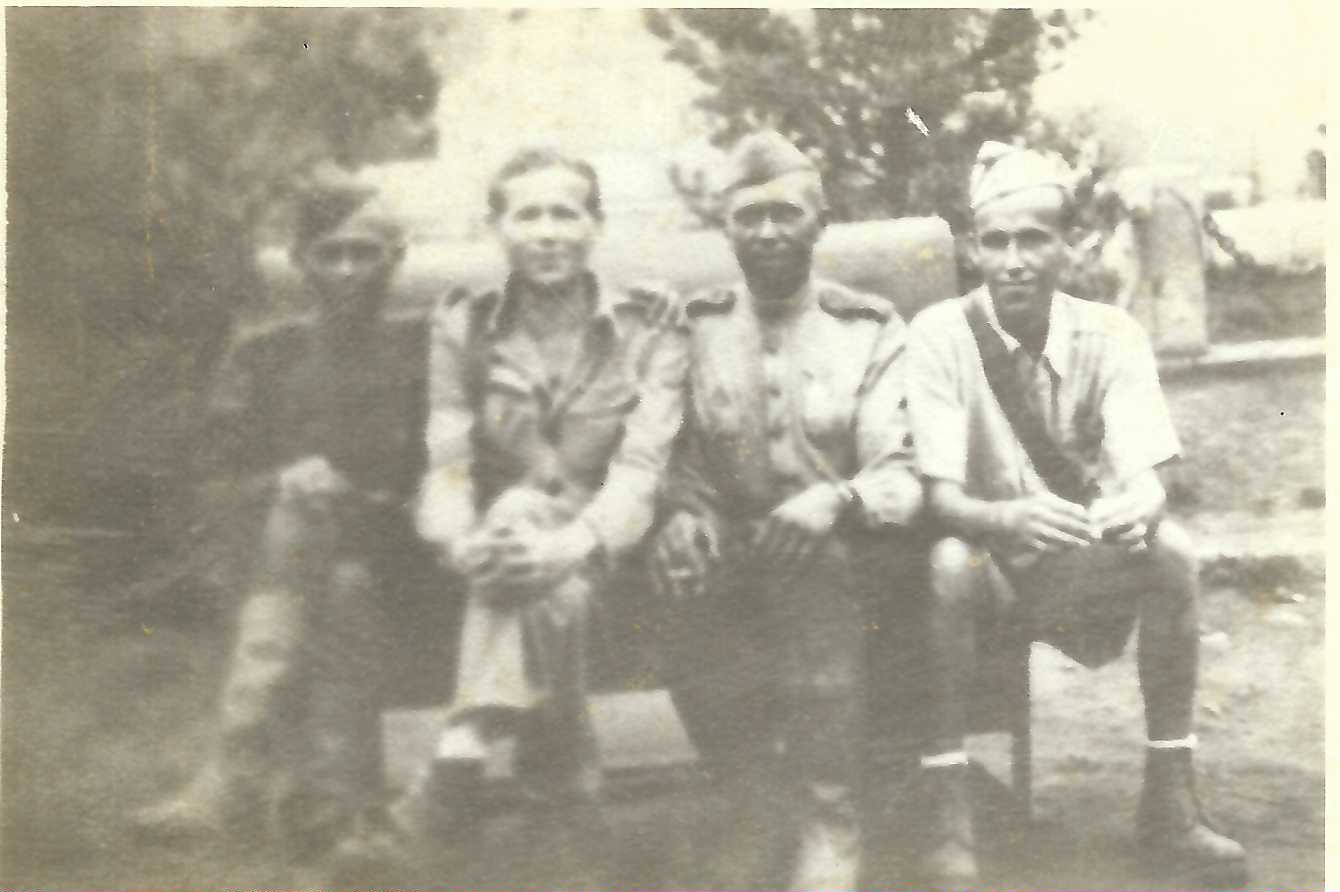
On a personal note, one of my mentors had been in Manchuria at that time. After the surrender he was captured and spent eight years in Siberian detention. Knowing his story gives this campaign a very human weight for me. And of course, your own father’s presence there makes this history resonate all the more strongly.
*Colonel, US Army, ret., historian who has published extensively on Soviet military history and doctrine, including:
- August Storm: The Soviet 1945 Strategic Offensive in Manchuria, https://www.armyupress.army.mil/Portals/7/combat-studies-institute/csi-books/Glantz-lp7.pdf
- August Storm: Soviet Tactical and Operational Combat in Manchuria, 1945,
https://www.armyupress.army.mil/Portals/7/combat-studies-institute/csi-books/Glantz-lp8.pdf
He is probably best known for When Titans Clashed: How the Red Army Stopped Hitler (1995, revised 2015), which he co-wrote with Jonathan M. House.
 Slightly East of New
You must be logged in to post a comment.