Welcome to Conceptual Spiral

I’ve put together a short introduction to Conceptual Spiral, Boyd’s last major briefing.  So few people, even those who can quote from Patterns of Conflict, ever take the time to look into CS that I thought perhaps a few introductory remarks might help ease folks into it.

Boyd considered CS to be one of his major pieces, in some ways the fulfillment of everything he had done up until then, so it will repay the effort needed to master it.

[YouTube has several videos of Boyd delivering and commenting on Conceptual Spiral.]

Bookends of the Discourse

Here are the last two elements of John Boyd’s Discourse on Winning and Losing, the Abstract and Revelation.

When he was giving out copies of the Discourse, the “Green Book,” the order was:

  1. Abstract
  2. Patterns of Conflict
  3. Organic Design for Command and Control
  4. Strategic Game of ? and ?
  5. Destruction and Creation
  6. Revelation

In 1992, he completed his last major briefing, Conceptual Spiral, and then, in 1996, his last work of any length, The Essence of Winning and Losing.  He placed Conceptual Spiral right after the Abstract, but as far as I know didn’t include Essence in any last copies of the Discourse that he may have distributed.  Boyd died on March 9, 1997.

The logical position for Essence would be just before the Revelation because it assumes familiarity with the concept of “operating inside OODA ‘loops,'”  which is treated in detail in Patterns, Organic Design, and Strategic Game.

I wouldn’t put too much emphasis, though, on a canonical ordering.  Most people start with Patterns of Conflict and never get beyond it.  But there is a richness in considering the topic of winning and losing from a larger perspective, that of accomplishing our objectives — achieving happiness, in other words — in a world that appears to be conspiring against us.  There’s nothing to be lost by starting on the battlefields of Patterns and then exploring one’s way to wherever one’s fancy carries.

All of Boyd’s work is (or very soon will be) available at http://dnipogo.org/john-r-boyd/.

Boyd’s Conceptual Spiral

This was Boyd’s last major briefing (164 KB PDF), carrying the date “July / August 1992.”  In it, he addresses the question of how we generate the new actions and ideas we need in order to thrive and grow in an uncertain, competitive, and sometimes downright dangerous world.

For his answer, he returns to the themes he laid out in his 1975 paper, “Destruction and Creation,” and weaves in material from all of his other briefings.

One thing to note as you’re going through it — the emphasis John places on performing analyses, arriving at a synthesis, and then testing our synthesis in the external universe.  In a conflict situation, we may go through this conceptual spiral quite rapidly, but we are always thinking, we are always mindful, and we always have our senses and our gray matter engaged.

Amazing

Boeing launched the 737 with an order from Lufthansa in February 1965 and delivered the first aircraft to Lufthansa 43 years ago, almost to the day, in December 1967. Right, that’s less than 3 years. After more than 6,000 orders, the aircraft is still in production. To put this in perspective, forty-three years before that first delivery, that would have been December 1924, Luck Lindy had soloed the previous year and was still more than 2 1/2 years from his epochal flight. Think Jennies and barn stormers.

As my good friend, George Hamlin put it, that’s amazing! In his column for Air Transport World, he mentions that the 737’s record is matched on the civilian side by one other airplane, also a Boeing product.

As you’re reading George’s article, ask yourself why this happened: Do OODA loops not apply to the realm of commercial aviation?

Impeccable timing

Tony Perry reviews Robert Coram’s Brute for the LA Times:

Along with this brisk, highly readable, strongly reported biography’s other attributes, add impeccable timing.

Coram does not shrink from Krulak’s unattractive side: He grabbed credit from others. He could be cold toward his family. He was devious in inter-service wrangling and Beltway politicking. He concocted stories to enhance his already considerable reputation for brains and bravery. He hid and then denied his Jewish heritage.

Still, Coram argues for a larger evaluation of his subject. And he suggests the future of the Marine Corps in the 21st century may depend on whether a new Krulak steps forward.

Covington’s Famous Son

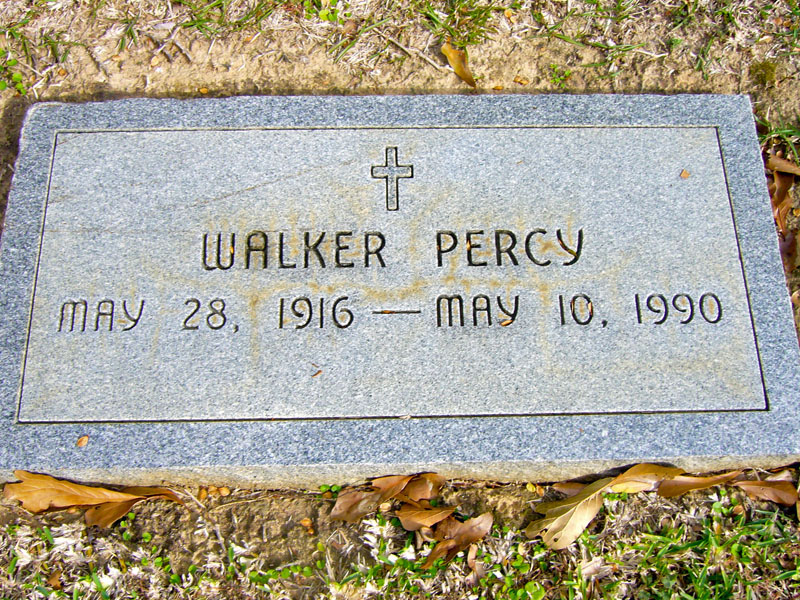
Walker Percy — who was born in Birmingham, AL, spent his formative years with his uncle William Alexander Percy in Greenville, MS, and earned his MD from Columbia — lived in Covington, LA, from 1950 until his death in 1990.  He has long been one of my favorite writers. Today, Ginger and I went exploring for traces of his life here.

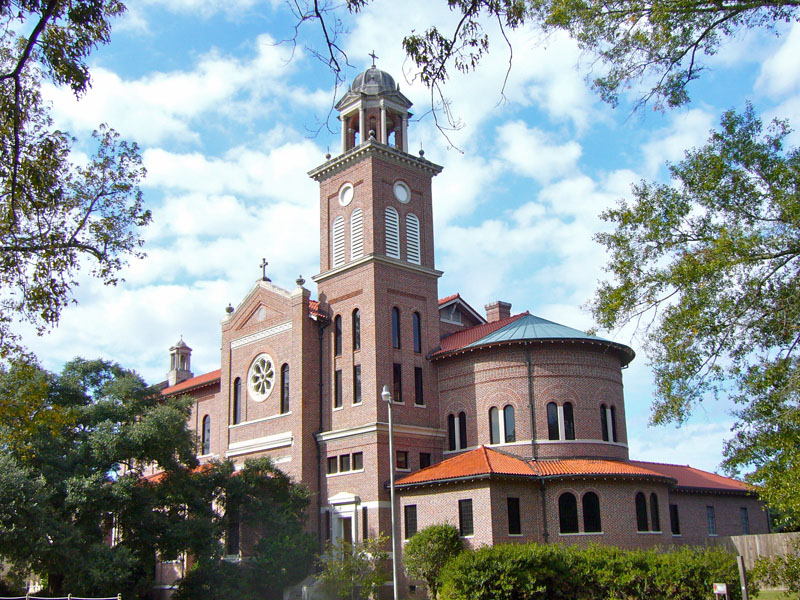
We haven’t found his home, yet. But several sources indicated that he was buried in the cemetery at St. Joseph Abbey about three miles north of town. So with the assistance of the handy iPhone, we headed off in that direction.

We had no idea what to expect — guards at the gate? Inquisitors lurking in the parking lot? As it turns out, we shouldn’t have worried. A seminarian pointed us in the direction of the cemetery, where a brother and his friend took us to Percy’s grave site.

After an enlightening 15 minutes or so discussing Catholic influences on Percy’s writing, they left us to contemplate his grave and the ethereal beauty of the abbey grounds.

I can see why one of America’s greatest authors would choose this for his final resting place.

At Miss Eudora’s Place

In Jackson, Mississippi.  We stopped by after visiting Willie Morris in nearby Yazoo City.  Eudora Welty (1910 – 2001) was that fascinating combination of a very private person who was certainly not a recluse.  Although she lived by herself in the family home for years after her mother died, she traveled widely and loved entertaining friends.

Her house in the Fondren District of Jackson has been preserved as it was in 1990, when she was still an active author.  As you would expect for a master craftsman of the written word, her place is a treasure trove of books. She was an eclectic reader, and when her house was readied for public view, curators counted over 5000 of them.

Take the E. Fortification St. exit off I-55.

Although you could walk to downtown Jackson, her home is an oasis of tranquility, and her garden still provides inspiration for any artist. Oddly, her office faced a relatively busy cut-through street, but it let her type her manuscripts while listening to the the sounds carrying over from the music department at Belhaven College across the street.  It also let visitors see if she was in so they could ask for autographs.