Deep Dive into the OODA Loop

Mark McGrath of AGLX has just done a really deep — 1 hr 40 min — dive into the heart of John Boyd’s OODA Loop:

Mark brings a unique set of qualifications:

  • He’s a former US Marine
  • He has spent years working with the OODA loop in his own businesses
  • He also researched Boyd’s original notes at the Boyd Collection in the Marine Corps University Library in Quantico, VA.

This last part is important because the “loop” didn’t spring fully formed from Boyd’s brow like some modern day avatar of Athena. Boyd first used the term as part of the expression “operating inside the OODA loop” at least as early as the mid-1970s. But he never wrote down what it actually was. As recently as 1989, he was still describing it as a linear observe-then-orient-then-decide-then-act process, which would make further elaboration superfluous.

But in the early 1990s, when he was working on his last briefing, The Essence of Winning and Losing, he needed a sketch of the OODA loop. As he started fitting the pieces of that presentation together, he realized that the simple circle wasn’t going to do the job. After many, many, MANY iterations (I was involved with a few of them), he settled on the version that appears in that presentation. It is this collection of iterations, and many other hand-written sketches riddled with arrows and acronyms (some of which have yet to be deciphered), that Mark studied.

It’s a long podcast, so I’d recommend you take it a little at a time.

Speed versus Quickness

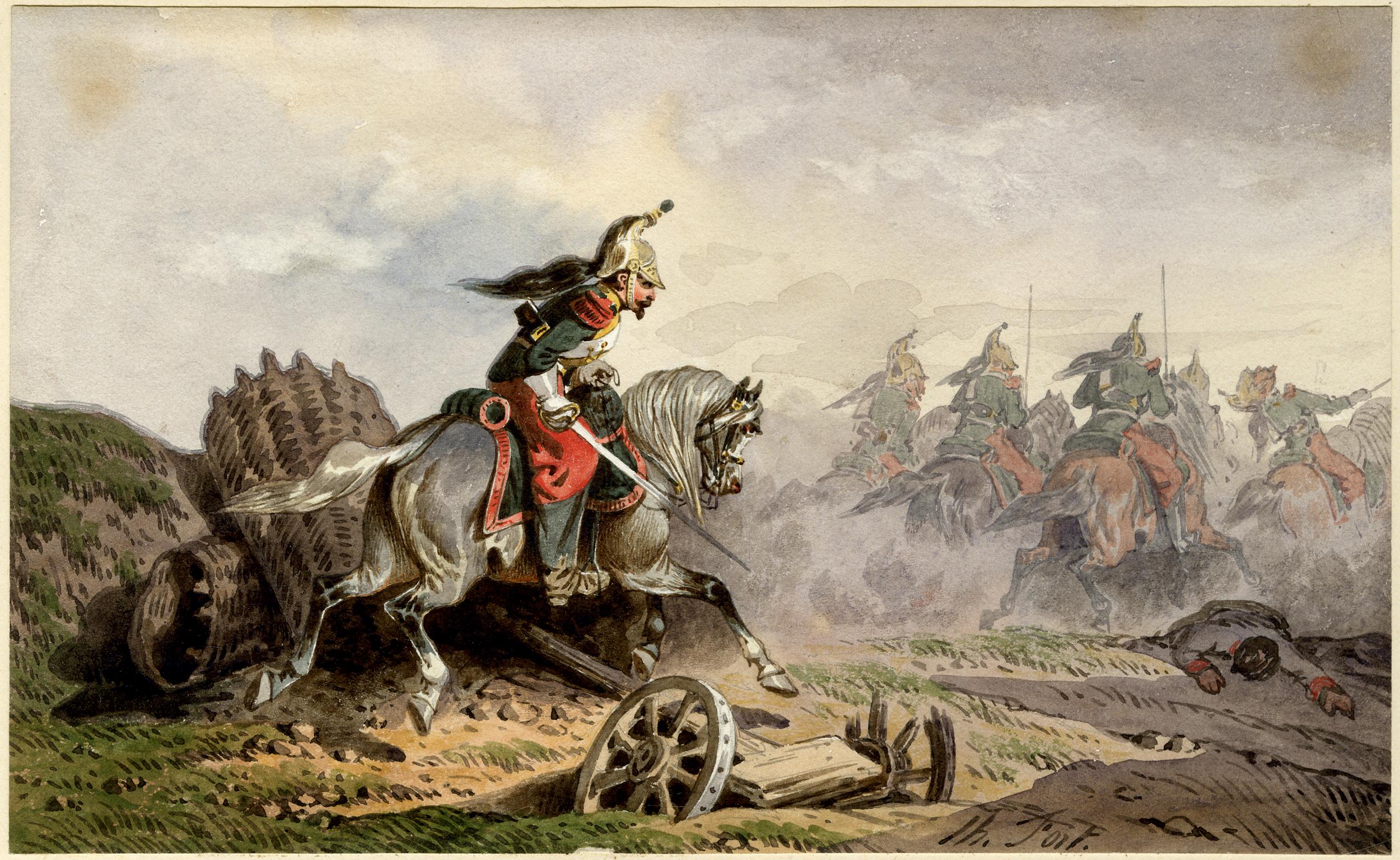
Drawing by French artist Théodore Fort c. 1845. © The Trustees of the British Museum. Shared under a Creative Commons Attribution-NonCommercial-ShareAlike 4.0 International (CC BY-NC-SA 4.0) licence.

Editor’s note: One often hears that Boyd insisted that the side with the faster OODA loop wins. Here’s what one of Boyd’s closest associates, Chuck Spinney, says about that.


Aide Memoire

It seems to me that it is important to appreciate that the difference between speed, quickness, and initiative is crucial. When it came to the OODA loop, Boyd, after considerable thought, came to view “quickness” as the crucial factor related to what many people confuse with raw speed. That is because he is describing the interaction of multiple opposing OODA loops in conflict and cooperation, and a focus on absolute speed can lead one astray. 

Perhaps a simple (and over-simplified) example can help to illustrate the point. You can not generalize from this, because it is very extreme example to illustrate the point (a more general version of working on an adversary’s orientation is given by Boyd in his “Counter Blitz a la Sun Tzu”). [Editor’s note: Slides 146 – 155 of Patterns of Conflict.]

Imagine two adversaries in conflict, call them A and B. A has an insight into B’s Orientation and decides to set up a trick based on a deception. A plans to strike at point 1 but wants to convince B the attack will be at point 2, before the battle or operation is joined. A prepares this trap over a long period of time, e.g., by setting lures and deceptions, to reinforce the pattern in B’s mind. All this takes place over months.

Moreover, A can monitor the degree to which B is buying into the deception and can reinforce the false impression by feeding carefully tailored information (which is based on the monitoring). Finally, assume B does not appreciate the extent to which his Orientation is being shaped and monitored by A. Now assume further that B has a higher speed OODA loop than A in normal circumstances.

A strikes object #1 but B’s orientation is that the real objective is #2, so B moves faster (in the wrong direction) than A can possibly move (remember B has a speedier OODA loop). Result B, is blindsided when it dawns on him that his Orientation was wrong, and coupled with the presence of menace, the sudden eruption of surprise events cause the speedier OODA loop of B to over- and under-react and degenerate into confusion and disorder, which by the presence of lethal menace is magnified into panic, chaos, and maybe even collapse.

So, who really has the quicker OODA loop? A laid out an elaborate deception, methodically over a long period of time, but A could also monitor B’s orientation and therefore reinforce B’s mistaken impression of unfolding events. B acted speedily but in wrong direction and played into A’s hands, and the unfolding, menacing events suddenly loomed out of nowhere to threaten B, causing anxiety, confusion, which if exploited properly could be magnified into chaos, panic and collapse. Boyd would argue that A had a quicker OODA loop than B because A controlled the pace and shape of action. In other words, A had the initiative, even though B’s OODA loops were inherently faster.*

Now perhaps B’s speedier OODA loop could enable B to recover the initiative, if A did not or could not press its Orientation advantage in such a way as to prevent B’s OODA loop from operating effectively at its natural tempo and rhythm.  

Basically, Orientation is by far the most important part of the OODA loop because it not only shapes Decision and Action but it also shapes (or misshapes) Observations — in this artificial example A had a better Orientation (by definition because it could monitor B’s Orientation whereas B could not monitor A’s Orientation). In the example I just described, A had a better appreciation of what it was Observing whereas A’s deception operation, coupled with A’s monitoring capability, caused B’s Orientation to misshape its Observations, and indeed amplify B’s disconnect from reality, assisted by A’s reinforcing action on B’s Orientation. 

Bear in mind, this is an artificial example, but the reader might have recognized that its essential attributes loosely paralleled those surrounding the Allies advantages over the Germans leading up to the D-Day invasion and its immediate aftermath. 

At the strategic level of conflict, the Allies contrived an elaborate deception plan aimed at convincing the Germans they would invade France at Pas the Calais instead of Normandy. They even created a phony army under Patton, who the Germans considered our best operational commander, complete with a phony signals net. 

The Allies also had Bletchley Park’s Ultra Secret and an effective spy network. They had duplicated the German Enigma machine and could read the most secret German codes, while the Germans had no idea their codes were broken. So the Allies could monitor the extent to which which Hitler and OKW were buying into the Allied deception plan and their judicious use of spies could feed in formation that reinforced the pre-conceived beliefs and observations that contributed to the mis-orientation of the Germans. 

The Allies used a variety of ruses thereby creating false Observations — creating a kind of confirmation bias — that reinforced the German’s Orientation that the invasion would take place at Pas de Calais. This all took place over a period of months, and even though the Germans knew an invasion was imminent in June 1944, the allies could verify that the German Orientation was causing them to focus on the wrong place.  

In the event, Hitler and OKW withheld the Panzer reinforcements from counter attacking at Normandy long enough for the Allies to establish a secure beachhead.  Allied control of the air compounded the German Orientation problem by slowing the Action part of the German OODA loop. But the operational level OODA loops of the German ground forces enabled them recover somewhat and eventually extract a large number of troops before we closed the Falaise Gap (even though, the allies captured a large number Germans as well). 

The Allies were able to maintain the initiative at the strategic and operational levels of the conflict, even though their tactical level OODA loops were slower and more methodical that those of the Germans, because they were inside the German loops at the operational and strategic levels of the Normandy operation. 

Conversely, the Allies, who had come to depend on their Orientation advantage, were taken by complete surprise six months after the successful Normandy landing in the Battle of Bulge because the Germans used secure land lines to organize their offensive. 

OODA loops in guerrilla war are also display a similar speed/quickness dichotomy in this regard … guerrillas maintain links to local populations gives them a similar Orientation advantage.  In fact the North Vietnamese had a telling saying with respect to the issue speed versus quickness — the Americans may control the clocks, but we control the time.

By the way, we coined a term for a situation where Orientation drives and misshapes Observations at all levels of conflict — “incestuous amplification” — it is the sine qua non of getting inside your opponent’s OODA loops. Incestuous amplification can also be a self inflicted wound, as is certainly evident in our OODA loops shaping the “kill chain” targeting decisions in drone warfare. 

Please excuse this long example, but the distinction of speed vs quickness and initiative are crucial to understanding Boyd’s ideas in the context he thought about them. 

The appendix in Coram’s book contains his short paper, “Destruction and Creation” — this is epistemological foundation of the OODA loop, although it predates his conception of OODA loop. I have a briefing explaining why this is so, if you are interested, you can download it that this link: Evolutionary Epistemology. [Editor’s note: All of Boyd’s works, including D&C, are available from our Articles page.]

Note also, at bottom, the theory of the OODA loop is about a living, non-linear phenomenon, which makes it biological in the sense that it is goal seeking, exhibits growth and decay, is evolutionary in nature (i.e., it is shaped by an unpredictable interplay of chance and necessity mediated by some kind of selection process), and is governed by a homeostatic control system embodying positive as well as negative control loops — that makes it an open, far-from-equilibrium open system prone to chaos.
 
Chuck Spinney
15 April 2015


*Editor’s note: Boyd would also describe this situation as A was inside B’s OODA Loops. See, for example, Patterns, slide 132.


Influence strategies

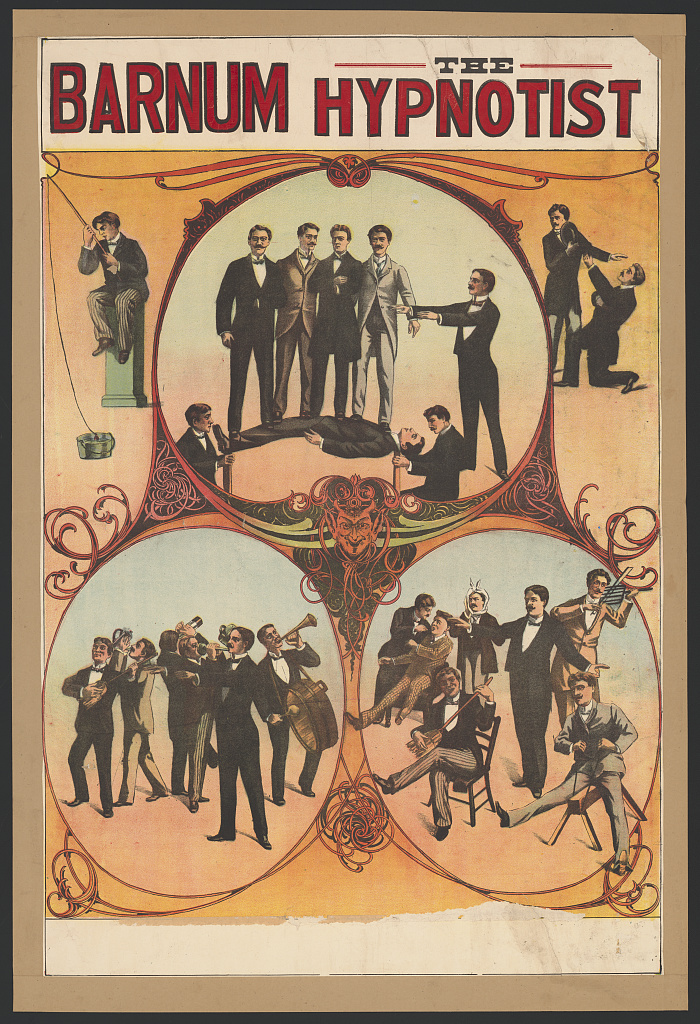
c. 1900. Library of Congress Digital Collection.

Once again, social science can help us understand behavior and why, or why not, certain influence strategies may be effective. Jeffrey Pfeffer, Thomas D. Dee II Professor of Organizational Behavior, Stanford University.


What he’s talking about is leadership. Here’s my definition:

Fire up the creativity and initiative of everybody in the organization; harmonize and focus this energy to accomplish the purposes of the organization.

And here’s Boyd’s:

Implies the art of inspiring people to enthusiastically take action toward the achievement of uncommon goals. Organic Design for Command and Control, slide 37 (available from our Articles page)

If you could magically reach in and influence everybody’s mind, leadership under either of these definitions would be much easier. A couple of years ago, I gave a presentation on leadership, The Lost Arts of Leadership, (31.4 MB PDF) to the Kanban Global Summit in San Diego. My thesis was that what Boyd, Pfeffer and I are all talking about is mind control, in particular, over groups of people.

Now before you laugh too hard, note that there are performers who make a good living doing just this, as in the picture above. For a contemporary example, go to Derren Brown’s YouTube channel. If you haven’t watched any of his videos, try one. It doesn’t take much of a stretch to imagine how these techniques could serve the purpose of leadership. And, as I tried to show in my presentation, they have been employed by effective leaders down through history (for better or for worse).

The principles that support leadership also enhance strategy, which can be thought of as leadership but over the opponent rather than within your own organization. The idea of influence strategies — controlling the enemy’s mind, rather than just reacting to his moves — goes way back. Here’s Miyamoto Musashi from 1645:

Using your knowledge of military tactics, think of all the enemies as your own soldiers. Think that you know how to make the enemy move as you wish and try to move the enemy around freely. You are the general. The enemy are soldiers under your command. The Book of Five Rings, Bradford Brown, et al. (1982), p. 78.

I’ve revised the presentation to feature a longer quote by Professor Pfeffer and added a reference in the accompanying notes (152 KB PDF) that provides data on the deleterious effects of picking some arbitrary percentage of employees judged to be poor performers and summarily firing them.

Speaking of the notes, which I highly recommend since they provide commentary and sources that I found interesting but would have made the presentation itself too long, I’ve gone through and (I think) reconciled the notes to the slide numbers.

Tom Barnett’s OODA Loop

Dr. Thomas P.M. Barnett, who is probably best known for his 2004 best-seller, The Pentagon’s New Map, gave a presentation last November featuring an OODA Loop. Because it is not the traditional circle, or John Boyd’s own sketch from my last post, I thought you might be interested in it. As an extra added attraction, he uses it to build a snowmobile a la Boyd*.

Question for my audience: Does what Barnett has constructed satisfy the purposes of an OODA loop (or “loop”) in Boyd’s sense? The link goes to my presentation “The Essence of Winning and Losing — Deconstructed,” and the roles Boyd prescribes for OODA loops (any OODA loops) are on slide 9.

Very Important Note: This is not a blog on geopolitics, so I am not going to comment on the specifics of Barnett’s conclusions. I know some of you have strong feelings on these issues, but this is not the place.

On a personal note, I have known Tom for many years and can attest he is quite familiar with Boyd’s work. His second book, Blueprint for Action, mentions me on p. 10. I have great respect for his curiosity and intellect, although we have had, over those years, spirited discussions on some of his recommendations. His latest book is America’s New Map, and he maintains a website and posts daily on substack.


*For those unfamiliar with Boyd’s snowmobile analogy, please download his briefing Strategic Game of ? and ? from our Articles page. He introduces his snowmobile starting on slide 6.

Deconstructing The Essence of Winning and Losing

If all men by nature desire to know, then they desire most of all the greatest knowledge of science. Duns Scotus

Download my new presentation, The Essence of Winning and Losing — Deconstructed. Or, where did the OODA loop come from, and what is it supposed to do? 505KB PDF

A pencil draft of the OODA loop arrived in the mail one day in early 1995 with a note from John Boyd asking me to turn it into a computer graphic. We went back and forth several times — I’d mail him updates, and he’d call up and want to talk. As I recall, the big bone of contention was the shapes of the arrows within the Orient block: which should be solid and which dashed, and in which directions the arrows should point.

He was particularly worried about the arrows from new information and previous experiences into genetic heritage. In the end, though, he decided not make any distinctions and just connect each of the bubbles to each of the others with solid arrows. Over the next several months, he added three more slides explaining what he wanted the OODA “loop” to do. Again, lots of back-and-forth.

By January 1996, Boyd had finished his revisions to The Essence of Winning and Losing. It was his last work, significant because in it he defines for the first time on paper what he meant by an OODA loop. Although he had been using the term since his first major presentation, Patterns of Conflict (created 1977 – 1986), It was virtually always combined with the preposition “inside,” in phrases like “operating inside their OODA loops.”

In fact, in the 319 slides that he created before TEoWL, he used the phrase “OODA loop” by itself, whether abbreviated or spelled out, on only 5 pages. On none of these did he actually define it

Portrait of the philosopher Duns Scotus (c. 1265-1308), artist unknown, c. 1650. Bodleian Libraries, University of Oxford

If it meant “Observe, then orient, then decide, then act,” there would be no need for further explanation, other than defining the terms. The fact that we’re talking about TEoWL suggests Boyd had something else in mind.

To guide us through Boyd’s process of constructing the loop, TEoWL begins with the concept of an “implicit repertoire.” These are the practices we need to “make intuitive within ourselves” as Boyd put it, in order to deal with those urgent and unpredictable requirements that the situation, including opponents in a conflict, throws at us. TEoWL asks where this set of practices comes from and how we add to it as circumstances change.

Put another way: From the infinite set of possible practices that we might create and train for, and given that there are only 24 hours in a day, how do we select? That is the question at the heart of TEoWL, and the answer he came up with is an OODA “loop.”

A few points to keep in mind:

  • The purpose of the “OODA loop ‘sketch’” on page 3 is to “clarify” a set of statements he makes on the first page of the presentation and the interactions among them. These statements all address how we manage our implicit repertoire.
  • He called it a “sketch.” To use his snowmobile analogy from Strategic Game (1987), you might think of it as Model 1.
  • However, we know from research into his files at the Library of Marine Corps University, he created many prototypes before he settled on this particular one. My personal guess is that if he had lived (he died on March 9, 1997), there would have been additional releases.

What I have done is to break down the elements of TEoWL into what I hope are digestible portions in a largely graphical format. My primary audience is the collection of people who are adapting Boyd’s sketch to serve their various purposes. I thought it might be useful for them to briefly review Boyd’s derivation of the “loop.” In other words, it is for those philosophical engineers who are developing Models 2, 3, etc., which is, I am sure, what Boyd would be doing if he were alive today.

This presentation, along with all of Boyd’s presentations and lots of other stuff, are all available from our Articles page.

Inside Detroit’s OODA loops (again)

A couple of quotes from recent articles about the auto industry. The first is from the US, and the second from the UK, but I think you’ll get the idea.

In 2017, for example, there were 11 models available on the U.S. market for less than $20,000, according to Cox data. By the end of 2022, there were four. Then, by March 2023, only 2.

Among the cars discontinued last year was the Chevy Spark, the cheapest of which started at $13,600. Chevy sold more than 24,400 of those cars in 2021 — more than most luxury models can claim. Now, Chevy’s cheapest models cost more than $20,000.

“New cars, once part of the American Dream, now out of reach for many,” Rachel Siegel and Jeanne Whalen, Washington Post, May 7, 2023

And then,

European makers, prominently Ford, abandoning their entry-level models gifts a huge opportunity to predatory Chinese companies.

“Early Chinese cars were like the early efforts from Japanese and Korean makers: bad. No more,” Gavin Green – Car Magazine (UK), June 2023

About 18 months ago, we bought a Volvo XC60, the only car on the lot. It has the Inscription trim package — top of the line at the time — the B5 mild hybrid engine, and the advanced tech package with SAE Level 2 driver automation (same level as Tesla), and several other options. We were a little embarrassed because we really didn’t want anything so fancy, but now, it turns out to be right about the average price for a new car. And yeah, I know, Volvo is owned by Geely, a Chinese auto company (from 1999 – 2010, it was owned by Ford).

New Podcast: Boyd From End to Beginning

A couple of weeks ago, I sat down with a long-time friend and colleague, Jonathan Brown, to talk about John Boyd and discuss some of the major themes of John’s work.  To make it more interesting, Jonathan asked me to take the texts in reverse order, that is, starting with The Essence of Winning and Losing, then Conceptual Spiral, and continuing to “Destruction and Creation.”

The first week’s episode made it as far as Strategic Game. Next week’s podcast takes us through Organic Design, Patterns of Conflict, and finally to D&C.

Listen to Part I here: https://player.captivate.fm/episode/e8dab39e-7532-4752-b52f-c715e82150d3

An Orientation for IOHAI

Unlike “agility,” Boyd did define “orientation,” in Organic Design for Command and Control (1987).

Before giving his definition, he offered a preliminary thought, on page 13:

Orientation, seen as a result, represents images, views, or impressions of the world shaped by genetic heritage, cultural tradition, previous experiences, unfolding circumstances and the processes of analyses and synthesis. (Emphasis in original)

Sharp eyed readers will note that by adding “analyses and synthesis,” I’ve brought the definition up to his final version in The Essence of Winning and Losing (1996). I think what Boyd is doing here is trying to ease readers into his definition, which, as we shall see shortly is complex. He’s going to define it as a process, which suggests inputs and outputs. In the representation above, he’s describing the outputs. 

Continue reading

Empathy in Orientation

I tweeted a link to a Forbes article on empathy this morning, “Want more innovative solutions? Start with empathy.” by Tracy Bower.

Boyd explained his notion of orientation on chart 15 of Organic Design (available from the Articles link, above):

Orientation is an interactive process of many-sided implicit cross-referencing projections, empathies, correlations, and rejections that is shaped by and shapes the interplay of genetic heritage, cultural tradition, previous experiences, and unfolding circumstances.

I don’t recall any place where he defined “empathies,” or, for that matter, “empathy,” much less “projections,” “correlations,” or “rejections.”  These terms appear out of the ether, right after this chart:

organic_design_10

where he proclaims an “Insight” that:

Interactions, as shown, represent a many-sided implicit cross-referencing process of projection, empathy, correlation, and rejection. (OD, 11)

If you really want to have some fun, try briefing these two charts sometime.

Then, in his very last briefing, The Essence of Winning and Losing (also in Articles), he drew his infamous OODA “loop” sketch (his words), below which he recorded another “Insight”:

Also note how the entire “loop” (not just orientation) is an ongoing many-sided implicit cross-referencing process of projection, empathy, correlation, and rejection.

The Zen of Boyd?  I don’t know. Perhaps something to ponder. For example, if you squint hard at chart 10, are there other ways you could characterize these “interactions”?  And how is the Stuka pilot Hans Rudel an interaction?  Can you come up with some more relevant interactions to make a similar point about orientation?

Creating mission-oriented leaders

Don’t you want your organization to run better? Of course you do: Get rid of the office politics, cliques, backstabbing, passive aggression — morale goes up, blood pressure goes down, objectives are routinely exceeded, competitors / opponents get trounced. Hence, the size of modern CEO offices, which need to be that big to hold all the books on how to actually do it.

Among the many approaches, “agility” proposes to use time to shape the competitive environment, and, if necessary, react to changes before they become fatal. Nestled within the agile approaches, there is a school that insists the best way to do this is to fire up creativity and initiative throughout the organization and harmonize them to accomplish the objectives of the organization. Note that “throughout” includes everybody from new hires to the aforementioned CEO.

Boyd’s philosophy is obviously in this category. He proposed an organizational climate, often known by the acronym EBFAS,* whose purpose was to produce organizations that could shape, reorient to, and exploit rapidly changing situations.  Boyd regarded conflict as characterized by deception, surprise, ambiguity, stress and threat, which can lead to fear, mistrust, and a breakdown of cohesion. “Reorient to” is a way of saying that you understand such situations better than your opponents. “Rapidly” implies that given time, your opponents will figure these things out; don’t give them the time.

The “E” in EBFAS stands for Einheit, for which Boyd adopted the English “mutual trust.” It is fundamental, so organizational cultures that focus on building mutual trust are sometimes called “trust based.”  Of the other letters, perhaps the best known is “A” for another German word, Auftragstaktik, often translated as “mission command.”  It has become something of a sub-genre in management literature.**

Last month, I featured an article by Don Vandergriff on Auftragstaktik, where he described the origins of the concept and why high performing organizations use it.

Don has now followed up with a well-documented piece on how to train people for Auftragstaktik .  He describes an emerging methodology within the Army, Adaptive Leader Soldier Training and Education (ALSTE), and an implementation, the Army Reconnaissance Course, that have proven to develop leaders who can excel under the philosophy of mission command. These programs reflect initiatives Don has been working on for years and documented as far back as Raising the Bar (2006).


*I’ve done several posts on EBFAS — please use the search feature in the right column if you’re interested.

**For an in-depth look at Auftragstaktik, I can recommend Stephen Bungay’s The Art of Action and Don’s recent book on Mission Command.