Influence strategies

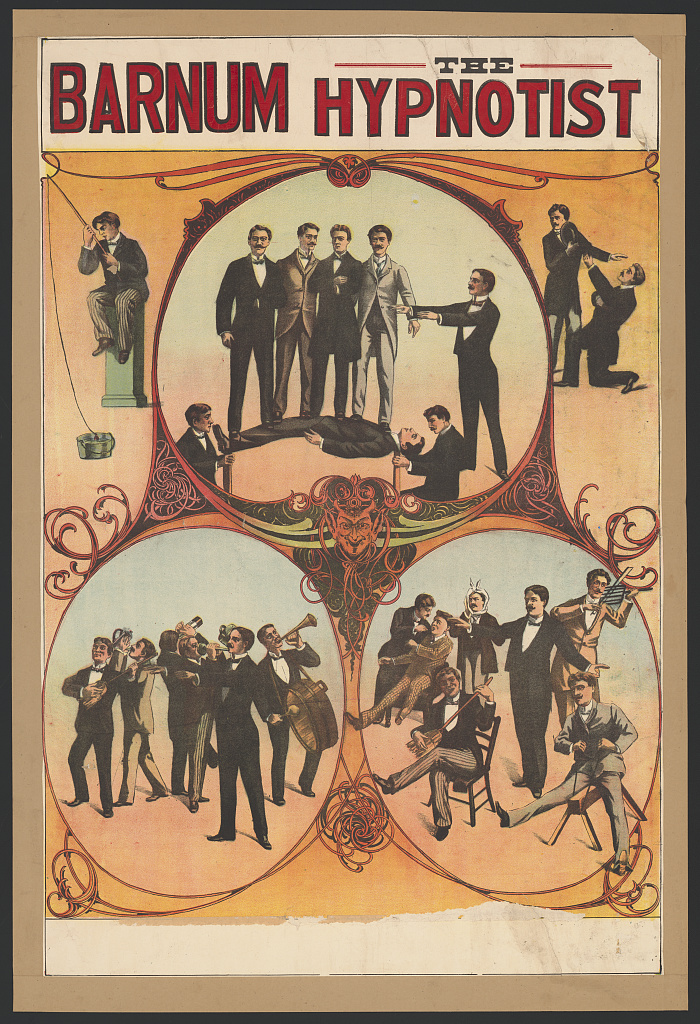
c. 1900. Library of Congress Digital Collection.

Once again, social science can help us understand behavior and why, or why not, certain influence strategies may be effective. Jeffrey Pfeffer, Thomas D. Dee II Professor of Organizational Behavior, Stanford University.


What he’s talking about is leadership. Here’s my definition:

Fire up the creativity and initiative of everybody in the organization; harmonize and focus this energy to accomplish the purposes of the organization.

And here’s Boyd’s:

Implies the art of inspiring people to enthusiastically take action toward the achievement of uncommon goals. Organic Design for Command and Control, slide 37 (available from our Articles page)

If you could magically reach in and influence everybody’s mind, leadership under either of these definitions would be much easier. A couple of years ago, I gave a presentation on leadership, The Lost Arts of Leadership, (31.4 MB PDF) to the Kanban Global Summit in San Diego. My thesis was that what Boyd, Pfeffer and I are all talking about is mind control, in particular, over groups of people.

Now before you laugh too hard, note that there are performers who make a good living doing just this, as in the picture above. For a contemporary example, go to Derren Brown’s YouTube channel. If you haven’t watched any of his videos, try one. It doesn’t take much of a stretch to imagine how these techniques could serve the purpose of leadership. And, as I tried to show in my presentation, they have been employed by effective leaders down through history (for better or for worse).

The principles that support leadership also enhance strategy, which can be thought of as leadership but over the opponent rather than within your own organization. The idea of influence strategies — controlling the enemy’s mind, rather than just reacting to his moves — goes way back. Here’s Miyamoto Musashi from 1645:

Using your knowledge of military tactics, think of all the enemies as your own soldiers. Think that you know how to make the enemy move as you wish and try to move the enemy around freely. You are the general. The enemy are soldiers under your command. The Book of Five Rings, Bradford Brown, et al. (1982), p. 78.

I’ve revised the presentation to feature a longer quote by Professor Pfeffer and added a reference in the accompanying notes (152 KB PDF) that provides data on the deleterious effects of picking some arbitrary percentage of employees judged to be poor performers and summarily firing them.

Speaking of the notes, which I highly recommend since they provide commentary and sources that I found interesting but would have made the presentation itself too long, I’ve gone through and (I think) reconciled the notes to the slide numbers.

An Orientation for IOHAI

Unlike “agility,” Boyd did define “orientation,” in Organic Design for Command and Control (1987).

Before giving his definition, he offered a preliminary thought, on page 13:

Orientation, seen as a result, represents images, views, or impressions of the world shaped by genetic heritage, cultural tradition, previous experiences, unfolding circumstances and the processes of analyses and synthesis. (Emphasis in original)

Sharp eyed readers will note that by adding “analyses and synthesis,” I’ve brought the definition up to his final version in The Essence of Winning and Losing (1996). I think what Boyd is doing here is trying to ease readers into his definition, which, as we shall see shortly is complex. He’s going to define it as a process, which suggests inputs and outputs. In the representation above, he’s describing the outputs. 

Continue reading

Is it agility or adaptability?

I tend to think of “agility” as adaptability with a time dimension, that is, the ability to adapt more rapidly to new situations than can competitors or opponents.  That may not, however, be the only or even a very good way to think about these concepts.

Here’s an alternative view:

AQ is hot right now – but is it the Adaptability Quotient or the Agility Quotient?

Kristopher Floyd
Founder and CEO, TeamMate AIDao-TheWay

November 13, 2018
Originally published on LinkedIn. Reprinted with his kind permission

Throughout military history, there have been winners and losers. Some of the winners have found disproportionate success due to strategic brilliance; when examining their successes, we find a golden braid that links them all together. This braid is the foundation of an underlying philosophy that dictates how military forces can survive and thrive in hyper-competitive, chaotic, uncertain situations. Continue reading

Fighting Smart

Col Mike Wyly*, USMC, ret., was one of the principle architects behind the Marine Corps’ doctrine of maneuver warfare. He and a group of advocates had written a number of articles in the Marine Corps Gazette and discussed and essentially sold the idea for a period of years between the end of the Vietnam War and the publication of the doctrine in FMFM-1, Warfighting, in 1989.

He recently recounted that one worry they all had was that once published and made official doctrine, it would stop evolving:

I alluded to it briefly in a response to a Gazette piece that was published, how I was in General Gray’s [Commandant of the Marine Corps] office along with John Boyd – just the three of us. General Gray had only days before signed FMFM-1. Boyd congratulated him but then got real serious and talked about how important it would be to keep the thinking – the “fighting smart” – alive and relevant. Were we ever to sit back and say “We did it”, we would lose it, Boyd warned. It would be our challenge to keep our minds open, too, in order that we stay relevant to the changing times.

The need to do so was always Boyd’s response when people asked him why he didn’t publish – even a book. Boyd worried that were he to ever do so, people would say “There it is! The answers are in the book!”, and stop thinking and lose relevance in the changing times.

Continue reading