Influence strategies

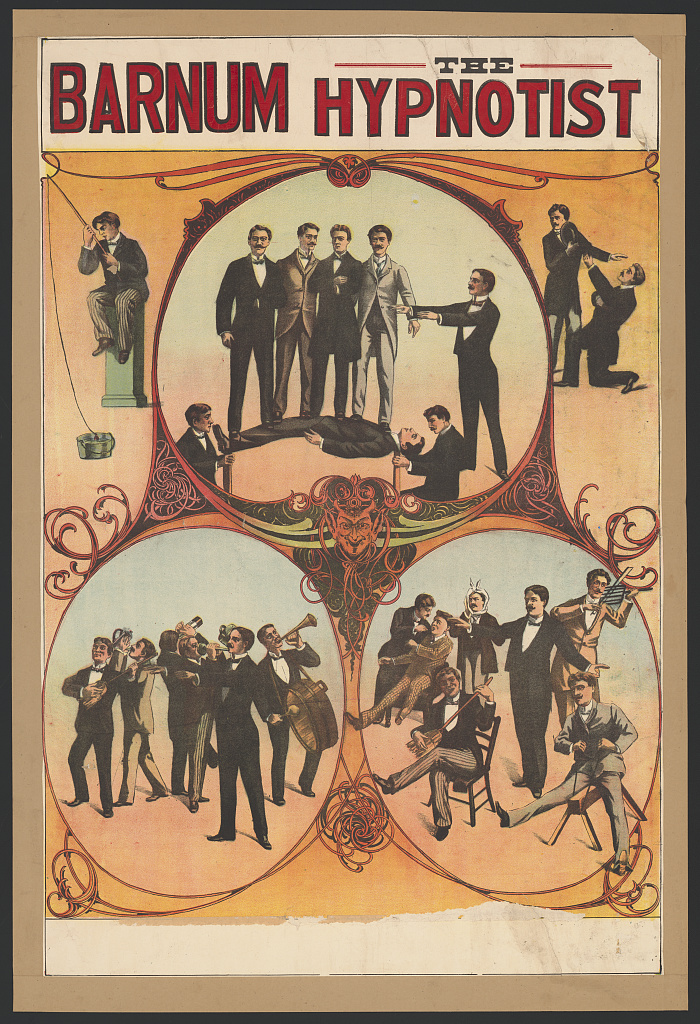
c. 1900. Library of Congress Digital Collection.

Once again, social science can help us understand behavior and why, or why not, certain influence strategies may be effective. Jeffrey Pfeffer, Thomas D. Dee II Professor of Organizational Behavior, Stanford University.


What he’s talking about is leadership. Here’s my definition:

Fire up the creativity and initiative of everybody in the organization; harmonize and focus this energy to accomplish the purposes of the organization.

And here’s Boyd’s:

Implies the art of inspiring people to enthusiastically take action toward the achievement of uncommon goals. Organic Design for Command and Control, slide 37 (available from our Articles page)

If you could magically reach in and influence everybody’s mind, leadership under either of these definitions would be much easier. A couple of years ago, I gave a presentation on leadership, The Lost Arts of Leadership, (31.4 MB PDF) to the Kanban Global Summit in San Diego. My thesis was that what Boyd, Pfeffer and I are all talking about is mind control, in particular, over groups of people.

Now before you laugh too hard, note that there are performers who make a good living doing just this, as in the picture above. For a contemporary example, go to Derren Brown’s YouTube channel. If you haven’t watched any of his videos, try one. It doesn’t take much of a stretch to imagine how these techniques could serve the purpose of leadership. And, as I tried to show in my presentation, they have been employed by effective leaders down through history (for better or for worse).

The principles that support leadership also enhance strategy, which can be thought of as leadership but over the opponent rather than within your own organization. The idea of influence strategies — controlling the enemy’s mind, rather than just reacting to his moves — goes way back. Here’s Miyamoto Musashi from 1645:

Using your knowledge of military tactics, think of all the enemies as your own soldiers. Think that you know how to make the enemy move as you wish and try to move the enemy around freely. You are the general. The enemy are soldiers under your command. The Book of Five Rings, Bradford Brown, et al. (1982), p. 78.

I’ve revised the presentation to feature a longer quote by Professor Pfeffer and added a reference in the accompanying notes (152 KB PDF) that provides data on the deleterious effects of picking some arbitrary percentage of employees judged to be poor performers and summarily firing them.

Speaking of the notes, which I highly recommend since they provide commentary and sources that I found interesting but would have made the presentation itself too long, I’ve gone through and (I think) reconciled the notes to the slide numbers.

Zen and the Art of Business Books

hiroshige

This is Tokyo, circa 1832.  The print is “Nihonbashi no hakuu” by the Ukiyo-e master Andō Hiroshige. Many years ago, my wife found a copy in a consignment store in Atlanta. I don’t remember what she paid for it, but she assures me that framing it cost many times the purchase price. Since we’ve been here in South Carolina, we’ve had it reframed to show off the stamps and writing around the borders.

Ch. 6 from OODA Loop

Intro to Chapter 6, Surprise and Anticipation

I’ve spent many hours contemplating this scene. The simplicity, the attention to details, the overall composition, the colors and shading — they bring out a spectrum of emotions that I find very satisfying.  The Japanese have terms for this effect. You may be familiar with wabi sabi or shibui, but there are a number of others that in English we sometimes group together as a “Zen aesthetic.” It’s something that I truly wish I knew more about.

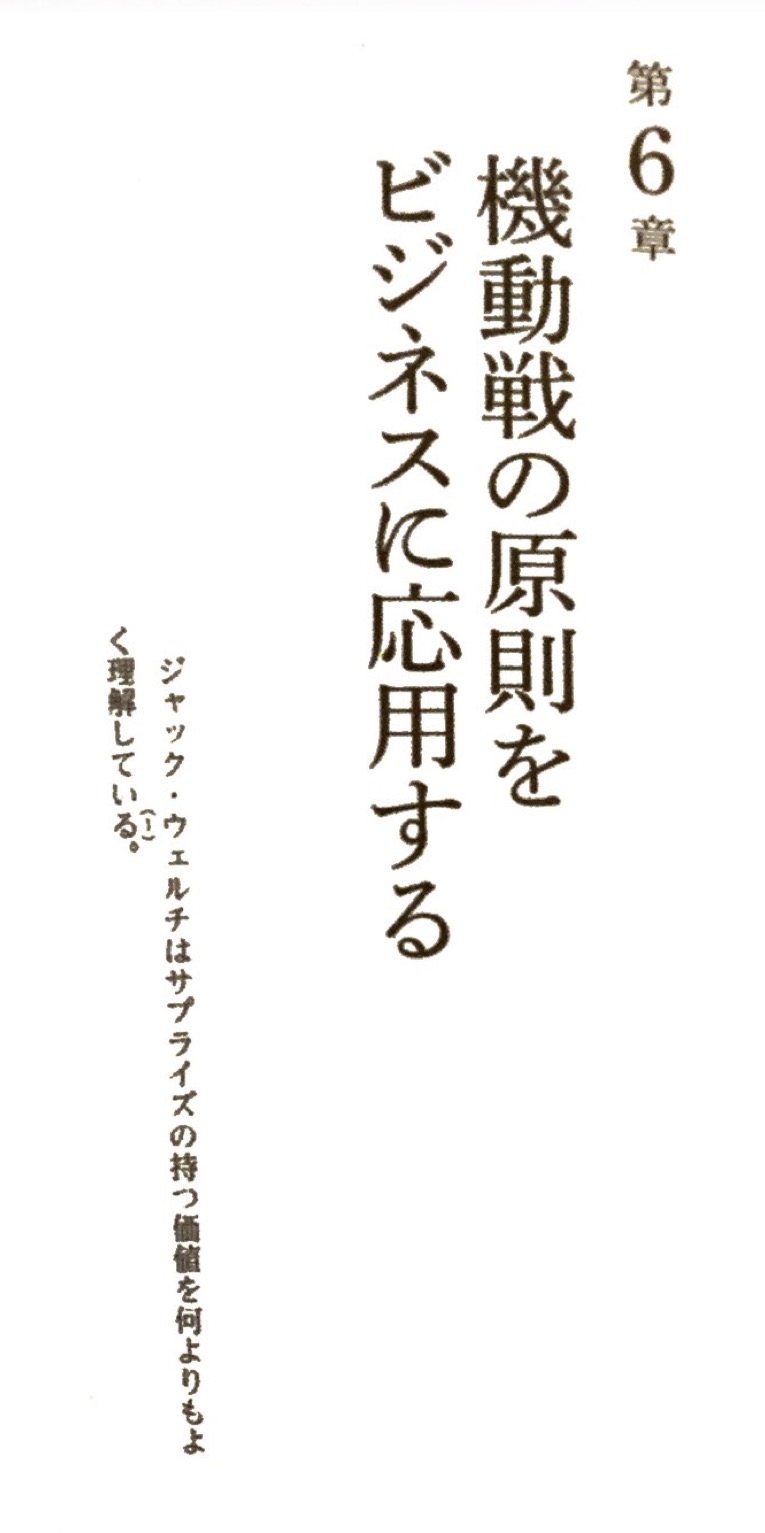
Some of these same emotions accompanied the Japanese edition of Certain to Win when I unwrapped it a few days ago.  This is a business book, but the attention to detail, the quality of the binding, the columns of kanji characters on the pages, even the feel and smell of the paper mark it as a minor work of art (OK, I may be a little prejudiced).

I offer this as an example of cheng / chi: I got what I expected, which isn’t surprising because I’ve been involved with the translation project since it started in June. But the final product still exuded a “Wow!” factor that I wasn’t expecting. Japanese has a phase for this, too: miryoku teki hinsihtsu, quality that delights the customer so much that they have to have it. Just a thought, but you might buy a copy if only for the artistic merit of the piece, even if you don’t speak Japanese.

In addition to OODA Loop, I’ve just received a couple of other books concerning Japanese culture and strategy that I’ll feature here in the next few days.  Boyd would have liked them both.

As for the print, you can download a high resolution copy from the Library of Congress’s collection of 2,500 such prints.  And, yes, you can also download The Great Wave Off Kanagawa.

Empathy in Orientation

I tweeted a link to a Forbes article on empathy this morning, “Want more innovative solutions? Start with empathy.” by Tracy Bower.

Boyd explained his notion of orientation on chart 15 of Organic Design (available from the Articles link, above):

Orientation is an interactive process of many-sided implicit cross-referencing projections, empathies, correlations, and rejections that is shaped by and shapes the interplay of genetic heritage, cultural tradition, previous experiences, and unfolding circumstances.

I don’t recall any place where he defined “empathies,” or, for that matter, “empathy,” much less “projections,” “correlations,” or “rejections.”  These terms appear out of the ether, right after this chart:

organic_design_10

where he proclaims an “Insight” that:

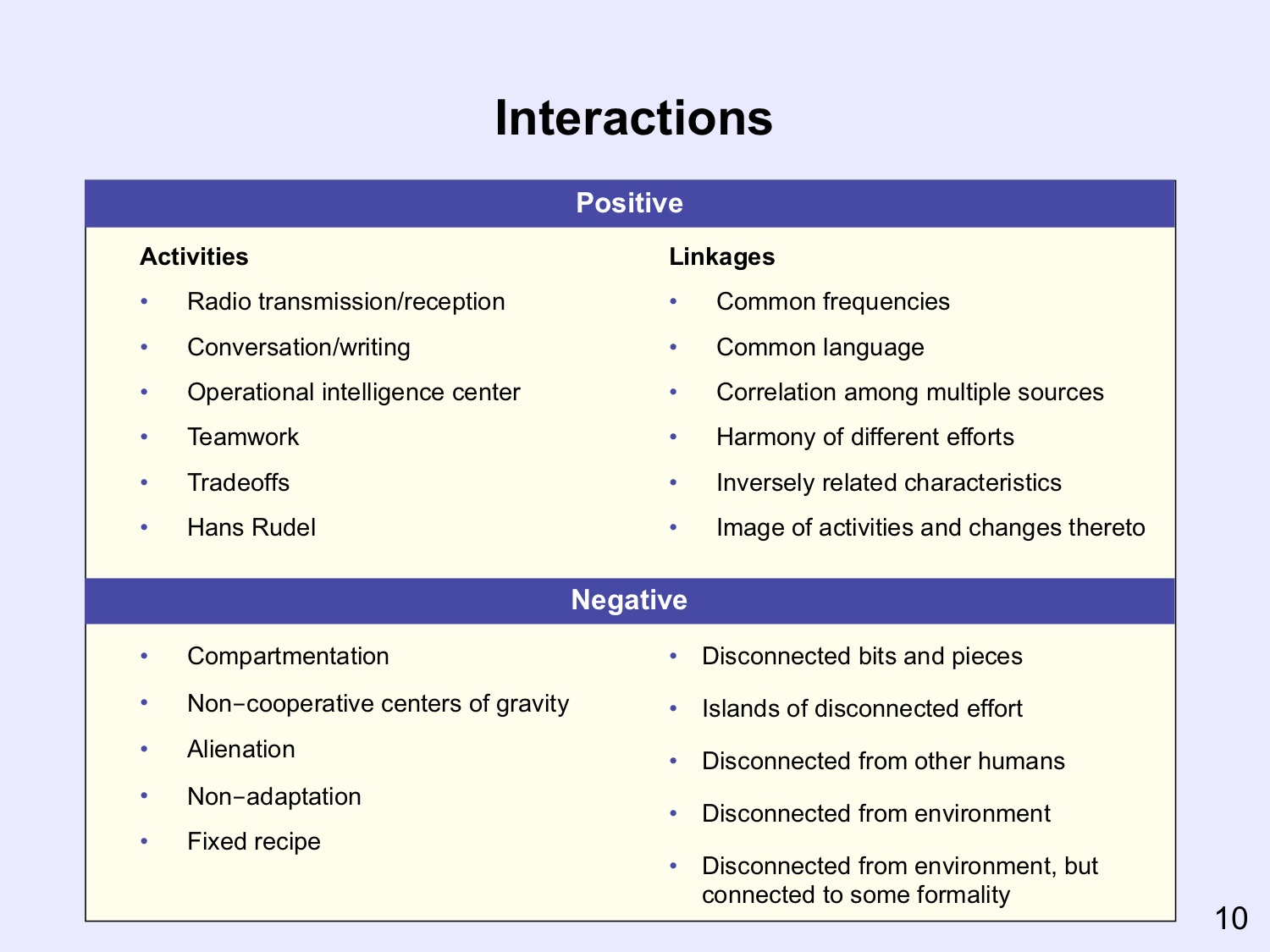
Interactions, as shown, represent a many-sided implicit cross-referencing process of projection, empathy, correlation, and rejection. (OD, 11)

If you really want to have some fun, try briefing these two charts sometime.

Then, in his very last briefing, The Essence of Winning and Losing (also in Articles), he drew his infamous OODA “loop” sketch (his words), below which he recorded another “Insight”:

Also note how the entire “loop” (not just orientation) is an ongoing many-sided implicit cross-referencing process of projection, empathy, correlation, and rejection.

The Zen of Boyd?  I don’t know. Perhaps something to ponder. For example, if you squint hard at chart 10, are there other ways you could characterize these “interactions”?  And how is the Stuka pilot Hans Rudel an interaction?  Can you come up with some more relevant interactions to make a similar point about orientation?

Is it agility or adaptability?

I tend to think of “agility” as adaptability with a time dimension, that is, the ability to adapt more rapidly to new situations than can competitors or opponents.  That may not, however, be the only or even a very good way to think about these concepts.

Here’s an alternative view:

AQ is hot right now – but is it the Adaptability Quotient or the Agility Quotient?

Kristopher Floyd
Founder and CEO, TeamMate AIDao-TheWay

November 13, 2018
Originally published on LinkedIn. Reprinted with his kind permission

Throughout military history, there have been winners and losers. Some of the winners have found disproportionate success due to strategic brilliance; when examining their successes, we find a golden braid that links them all together. This braid is the foundation of an underlying philosophy that dictates how military forces can survive and thrive in hyper-competitive, chaotic, uncertain situations. Continue reading

Masterpieces are never finished

Just abandoned (attributed to Leonardo da Vinci).

I’m not claiming that the new version of “Boyd’s Real OODA Loop” is a masterpiece, although I think it’s pretty good, but I am abandoning it for now, with the exception of an occasional correction or brilliant rephrasing.  It’s available from the Articles page.

It’s a major rework: pretty much every paragraph has seen some TLC, and entire sections have been moved around.  I added a new section on whether faster is always better and also threw in quotes from L. David Marquet and the Buddha.

By the way, if you’re interested in this sort of stuff, check out the Corporate Rebels web site, https://corporate-rebels.com/, and follow them on Twitter @corp-rebels

Just one word for the new graduate

Benjamin: Yes, sir.
Mr. McGuire: Are you listening?
Benjamin: Yes, I am.
Mr. McGuire: Neuroplasticity.
Benjamin: Exactly how do you mean?

This is another in a series of posts promoting, or at least complicating, our understanding of Orientation because Orientation is, after all, the Schwerpunkt.

In fact, if I had to boil Boyd’s philosophy down to one idea, it might be to ensure that your orientation makes more accurate forecasts than those of your opponents. If we’re talking business competition, substitute “customers” for “opponents.” Continue reading

Don’t move, be agile

Matthew Futterman, in “Ducks vs. Buckeyes: Classic Culture Clash,” from yesterday’s Wall St. J. (paywall), pointed out a great example of reorientation:

In 2004, [then-Oregon coach Mike] Bellotti got impatient. The pro-style offense he had inherited from Brooks had stalled. New defensive schemes, such as the zone blitz, where defenses could pressure the passer without becoming vulnerable to a run, had stymied Oregon’s rushing attack. The previous season the team had scored just 356 points, nearly 200 fewer than Pac-12 champion USC, finishing a middling 8-5.

Bellotti studied tapes of lesser football schools, such as Northwestern, Bowling Green and Utah, which played fast, spread its offensive weapons across the field and put the quarterback in motion on nearly every play. After caving to resistance from coaches and enduring a 5-6 season, he pressed ahead, starting to recruit players built to run the fastest, most kinetic offense college football had ever seen. The Ducks went 10-2 in 2005 and Bellotti became a hero across the state.

This is what Boyd called Behendigkeit, or “mental agility,” which is the ability to break out of one pattern of ideas and actions and adopt a new pattern.

Once you’re in a new pattern, then you can be agile within it:

Joel Klatt, the former quarterback at Colorado who now does analysis for Fox Sports, noted that Helfrich recently explained the Oregon philosophy of football in Zen language. “He said our goal is to constantly remain the same and in remaining the same to constantly evolve,” Klatt said.

Shunryu Suzuki, author of one of my favorite books, Zen Mind, Beginner’s Mind, put it this way when describing meditation:

Don’t move! But when I say don’t move, it doesn’t mean you can’t move.