Do we still need the Army?

This is a question I raised in A Swift, Elusive Sword back in 2001. I still haven’t heard a coherent answer.

The issue was — and is — that because the Army is designed for war on land, and because the advent of nuclear weapons has rendered war impossible except against weak, non-nuclear powers such as Iraq and Afghanistan, and because the USMC augmented by USAF and USN airpower and the forces of our allies are vastly more than adequate to engage in conventional warfare against Third-World opponents (and if our allies aren’t with us, should we be doing it at all?), why do we still need an Army? This is not an argument that the Army is incompetent, just irrelevant.

My suspicion is reinforced by a series of wargames recently conducted by the Army itself. As reported by Sidney Freedberg on the web site, Breaking Defense, “Adversaries around the world are catching up. By the 2030s some countries – or well-connected non-state forces such as Hezbollah – may challenge or even exceed American capabilities in a few key areas.”  So despite billions spent on R&D, the advanced technology labs of Hezbollah are outpacing us. This being the case, there is no sign that spending even more billions cannot be similarly negated.

Furthermore, even if we invest the money needed to stay ahead, techwise, it won’t be enough. As Freedberg opens his piece:

A massive wargame held here this week to explore the “Deep Future” of warfare in the 2030s demonstrated a stark truth — one that Clausewitz enumerated in his famous work, On War — there’s no substitute for sheer numbers, no matter how much high technology the Army buys.

We now have a situation with the Army that the more money we pump into it, the less advantage we get. Can you extrapolate this trend? It’s not clear that spending more provides no additional capability, relative to likely opponents, although inclusion of Hezbollah does make one wonder about this.

This is a case of zugzwang, a term originally from chess, where it means that it’s your move, but any possible move would make your situation worse (leads to a mate by the opponent, for example).  You’re not allowed to pass on your move in chess, for those who haven’t played in a while. The term has been broadened to include situations where you’re behind the power curve, that is, doing more just makes things worse. When one factors in the costs of more R&D spending and more people, especially in our current economic condition, spending more and getting less at the margin does hurt our ability to survive and prosper as a country.

The only solution is to quit playing this game. Invoke the Wookie Gambit and hurl the board to the floor. While you’re at it, re-examine the assumptions that got you into this position, in this case that a) a replay of WWII is still a reasonable planning scenario, and b) what decides the outcomes of conflicts are technology and numbers, in that order, which is about as far from the principles of maneuver as one can get (see, for example, Patterns of Conflict, chart 115, or Stephen Biddle’s excellent Military Power, pp. 20-25 — “technological superiority is no better than a coin flip for predicting victory and defeat.”)

It’s difficult to examine assumptions from within the system, even if the resulting problems are understood by the members of the organization. You can see this from Freedberg’s article. So the only alternative that makes sense is to wind down the Army as an organization that did its job but which we no longer need nor can afford.

This is not something that can happen immediately, and for the first decade or so, it won’t be cheap. Weapons programs typically have hefty cancellation clauses, for example, and the country must play fair with those who committed their careers to the Army. There will also be indirect costs: Weapons programs and force build-ups are the only fiscal stimulus programs that can make it through Congress, so ending them will put a further burden on the economy. But within a couple of presidential cycles, the benefits will become obvious as the country redeploys its treasure, manpower and brainpower.

Farewell to the mother country

A few final thoughts on our travels to England. Apologies to those of you who have been there many times. For those who might be considering going, here are some thoughts (click thumbnails for larger views):

SudeleyCastleWinchcombe

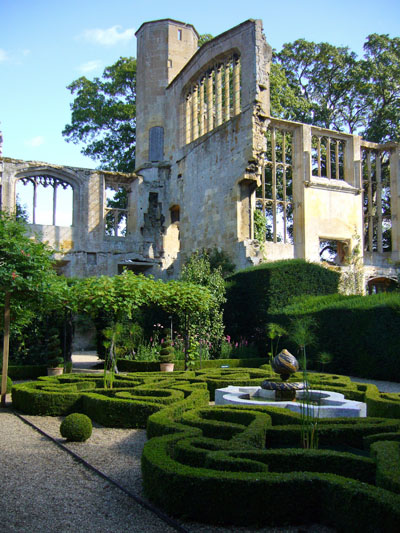
Sudeley Castle, home of Henry VIII’s widow

1.  They must be lying to us about their weather, saying that it’s wet and cold most of the year. Perhaps they even pay organizations like the Weather Channel to repeat these lies for them. I can reveal to you, however, that England has the same weather as Southern California. We hiked in the Cotswolds, for example, for eight days and saw not one drop of rain. From the conditions of the trails, it hadn’t rained for a couple of weeks before we showed up. Temps in the mid-80s. Be prepared for anything, in other words.
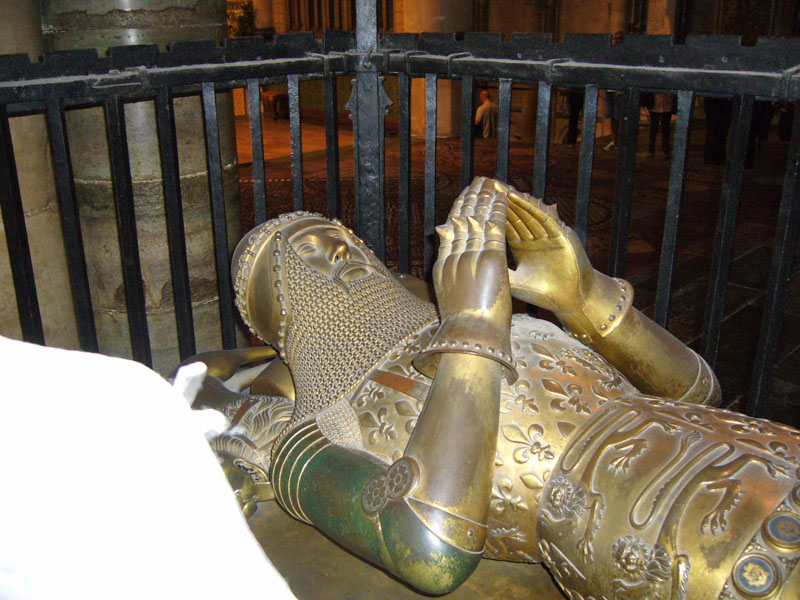
Tomb of  the Black Prince at Canterbury

Tomb of the Black Prince at Canterbury

2.  Sherpa Expeditions arranged our hike for us. They made the hotel / B&B reservations, transferred suitcases between hotels, and sent us detailed maps and instructions for each day’s trek (“Go through the kissing gate, turn right along the fence line for 50 meters, then take an azimuth of 81 degrees across the field for 300 yards. Look for a stile gate next to the big oak tree near the end of the stone fence.” Etc., for roughly 100 miles.) Will bring back those old land navigation skills that you still brag about to your spouse and kids. This is our second tour through Sherpa, and we recommend them highly. If you’re of the retired persuasion, ask them to schedule a day off about midway along the route.
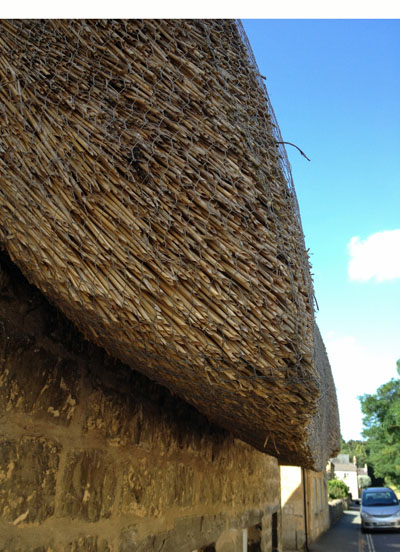
Detail of a thatched roof

Detail of a thatched roof

3.  Our itinerary started just outside the Cotswolds in Stratford-upon-Avon, then to Mickleton, Broadway via Chipping Campden, Blockley, passing by Stow-on-the-Wold to Bourton-on-the-Water (do they have a committee that makes up these names?), Guiting Power, and Winchcombe.
4.  The Cotswolds make for generally easy hiking, albeit with some vicious descents, as into Broadway from the Tower and down the ridge into Winchcombe. The region lies about a 2-hour train ride due west of London, consisting of rolling hills, stone fences, and

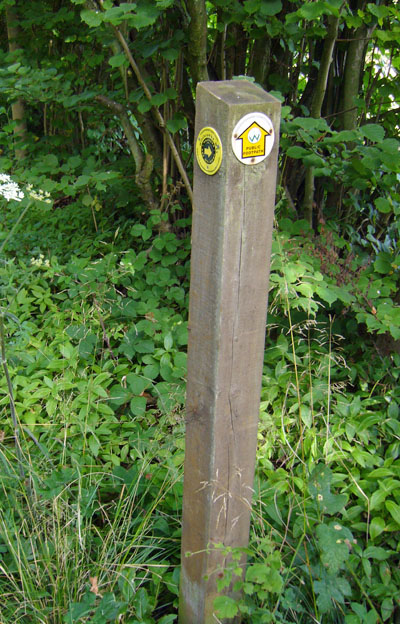
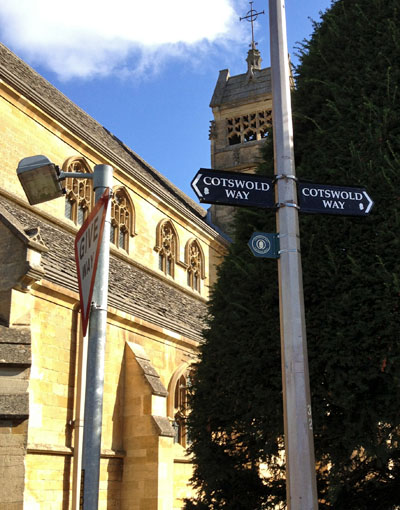
Typical waymarker

Typical waymarker

thatched-roof cottages. You wouldn’t be shocked to see Gandalf waving to you from his garden. The region is criss-crossed with well marked trails including the Cotswold Way from Chipping Campden to Bath. Our route occasionally followed the ‘Way but also included other trails like the Monarch’s Way, Warden’s Way, and the Heart of England Way and often just “public footpaths” through fields and farm buildings. England has strange rules about these things.
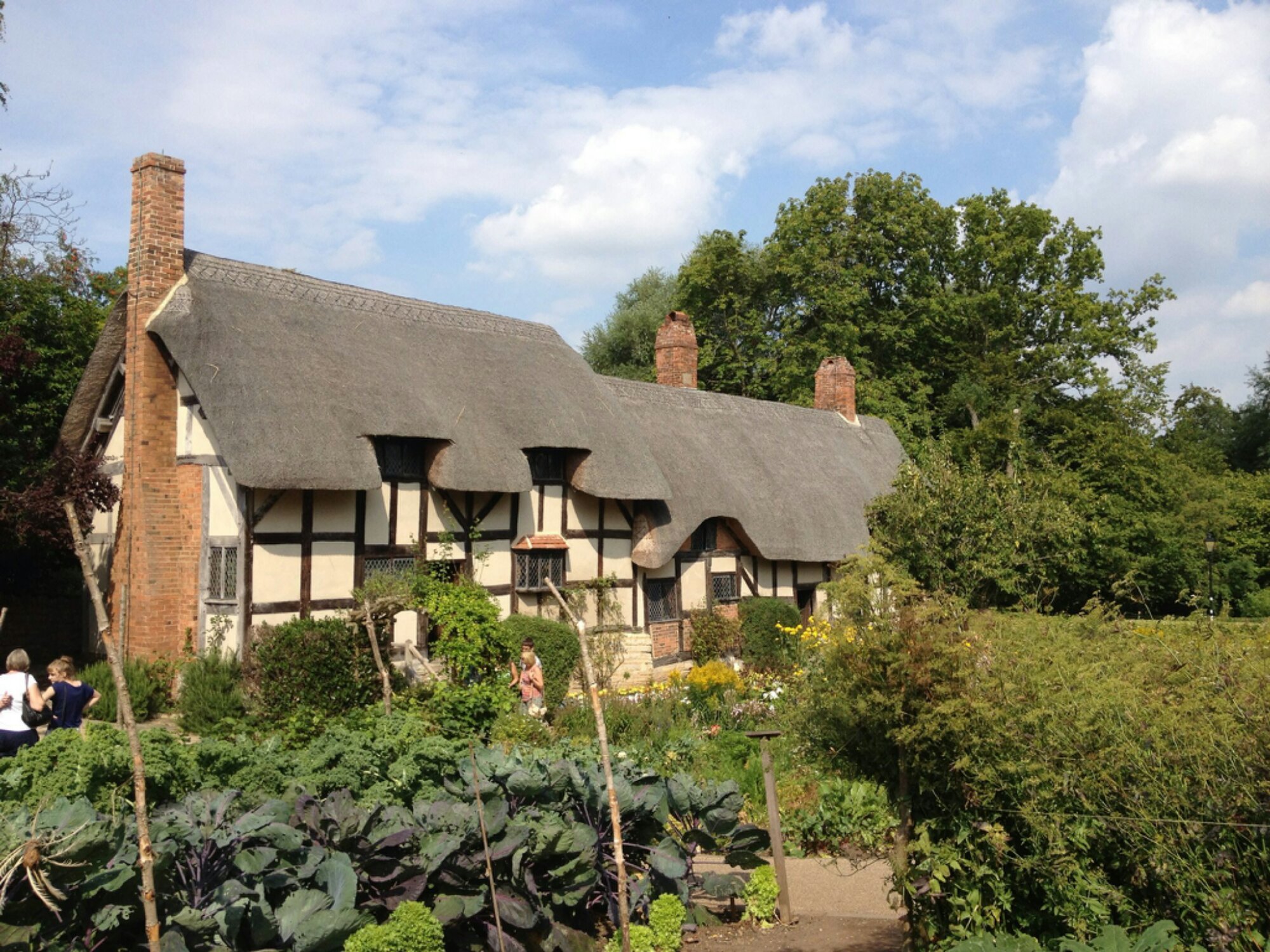
5.  I had assumed that those thatched roofs date back to Shakespeare’s day. Actually, they don’t last all that much longer than shingle roofs. For a typical American-sized 3-BR ranch, plan on shelling out about $200,000 to have one installed. Speaking of which, Anne Hatheway’s house was delightful.

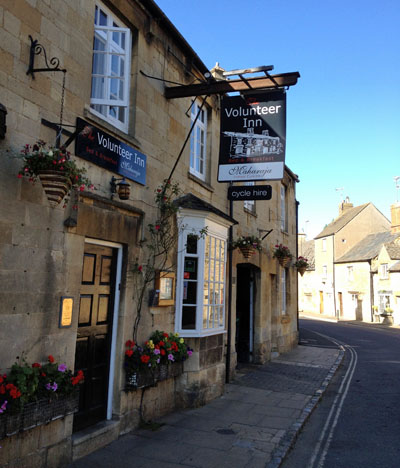
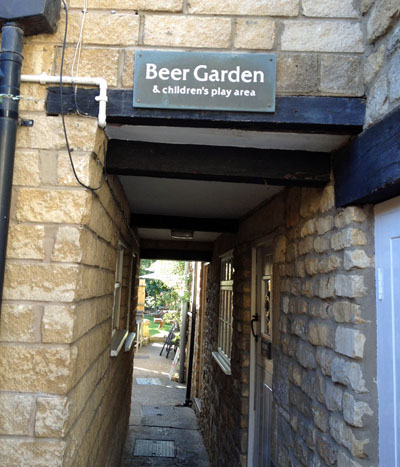
The Volunteer Inn

The Volunteer Inn

6.  All of our inns and B&B’s were memorable, and I’d go back to any one of them. Two, though, stand out. The Volunteer Inn in

Looking towards our room

Looking towards our room

Chipping Campden sits over a boisterous local pub, and when we saw it, we went OMG! We’re not going to get any sleep. But they put us into a clean if Spartan room well away from the bar. After dinner at the Lygon Arms, recommended by Rick Steves — as I’ve mentioned before, always trust Rick — one of us needed some urgent medical care unrelated to the Lygon. The bartender at the Volunteer Inn called NHS, then a cab and we were off to the local clinic about 10 miles away. Because of this little problem, one of us couldn’t walk for a couple of days, so the Volunteer Inn volunteered a ride in their luggage car (they actually move the suitcases for Sherpa).

The Guest House at Guiting Power

The Guest House at Guiting Power

7.  The other extra special inn was the Guest House in the hamlet of Guiting Power (“on Post Office Lane, formerly Cow Pat Lane”).  The GH excelled at all the usual B&B ambience and is right next to the Farmers Arms pub, with homemade vegetarian chili

Near the start of the Cotswold Way in Chipping Campden

Near the start of the Cotswold Way in Chipping Campden

on an extensive menu and featuring Donnington’s Ale!! But what made it special was the length Robert and Barbara went to to accommodate our wounded hiker.  The next morning, for example, when the Volunteer Inn’s schedule didn’t mesh with a follow-up appointment at the local clinic, Robert substituted with his own car. It’s about a 20 min trip, and gas over there runs something like $8.50/gal. Many, many thanks, Robert!

8.  So what about the NHS? Two data points: First, they took care of us. We were expecting long lines, perfunctory service (if we got any at all), and maybe even a big bill since we’re foreigners. Sorry to disappoint all my GOP buds out there, but we experienced none of the above. We got in on time to both appointments, care was excellent, problem was solved, and when we asked how much we owed, they just laughed at us. The first time would have been a trip to the emergency room here in the US, to give you an idea. When the incident happened, I called the TRICARE emergency number in the UK. They told me to use the local “minor injuries unit” and not to worry. They were right.
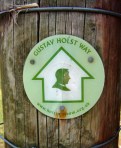
Way marker for the Gustav Holst Way

Way marker for the Gustav Holst Way

9.  Second data point: We visited an American friend who has lived in the UK for 6 years. This friend, whom let’s call “Bob” since I haven’t asked permission to use real names, is over 60 and knows how hard — impossible — it would be to get insurance in the US at his age, not to mention pre-existings. Bob’s putting off moving back until he turns 65 so he can stay on NHS. He certainly doesn’t enjoy paying 45%

Along the Gustav Holst Way

Along the Gustav Holst Way

income tax, but would enjoy paying for a stay in an American hospital even less. He could well afford it, by the way, but feels that the NHS is doing the job for him.
10.  The absolute highlight of the trip? Walking along the Gustav Holst Way between Bourton-on-the-Whatever and Guiting Power, listening to his two suites for military band on my iPhone. These two pieces, particularly the second, weave in many English folk songs, so the experience was magical. Again, visualize Gandalf & hobbits. The final movement of the first has been a favorite of mine since we played it in high school band, and I’ve been using it as my ring tone for the last several years.

The HMS Victory, now undergoing restoration

The HMS Victory, now undergoing restoration

Hastings, looking uphill towards the Anglo-Saxon lines

Hastings, looking uphill towards the Anglo-Saxon lines

11.  After the walk, we hit Bath, Portsmouth, Eastbourne, Canterbury, and London. But you know all those places, so I’ll skip the details, other than to mention that Eastbourne is a short hop from the battlefield at Hastings, 1066 and all that. The train “system,” a conglomerate of private “train operating companies” using a national, not-for-profit rail system, all tied into a unified reservation system, has been criticized in the UK. We rode it on eight occasions, though, and it  did work for us, including making two 4-minute connections in Brighton.

[We brought one of our daughters’ friends along with us. For his pictures, check out http://thefrogexpeditions.com. Best to start at the bottom and scroll up.]

Personages of Merrie Olde England

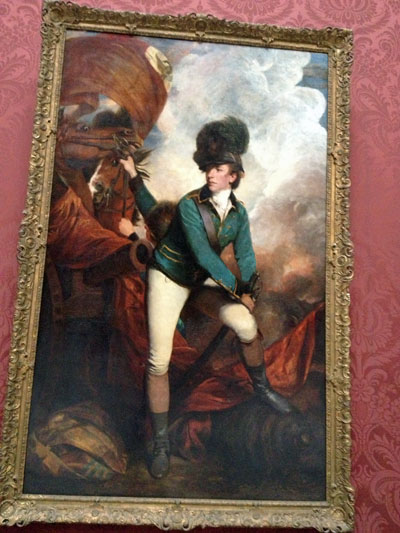
tarletonThis gentleman is General Sir Banastre Tarleton, 1st Baronet, GCB.  Considered an outstanding practitioner of light cavalry tactics, he rose to the rank of full general and was in contention to command British forces in the Peninsular Campaign, a position that  went to one Sir Arthur Wellesley. He was also an adroit politician, representing Liverpool in Parliament from 1790 – 1812.

Like another outstanding cavalry commander, Nathan Bedford Forrest, Tarleton is more fondly remembered by his compatriots than by his opponents:  Both were accused of massacring soldiers who had surrendered, and both were ardent supporters of slavery.  In Tarleton’s case, his battlefield success worked against him on the grand strategic level as his alleged brutality became a rallying point for the revolutionary forces that ultimately defeated him.

This picture of Tarleton by Sir Joshua Reynolds shows him as a Lt Col in the uniform of the British Legion, which he commanded. It hangs in the National Gallery in London, and therein hangs another tale. I recognized the picture immediately upon entering the Gallery and took it with my iPhone on Monday, flash off.  As I was reviewing the image on the phone, a polite voice informed me that photography was not allowed.  Great, I’m going to end my visit to England under arrest. But after apologizing, I was was allowed to keep it and the guard and I entered into a discussion of Tarleton, who, I assured him, was well known to students of American military history. He was, however, dismayed to learn that Tarleton is reviled in the States as “Bloody Ban” and the phrase “Tarleton’s Quarter” means no quarter at all. You may remember him caricatured as “Col Tavington” in the Mel Gibson film, The Patriot.  Students of US military history also remember that he got his butt kicked, to use the technical term, and his legion destroyed at The Cowpens. That defeat, coming soon after the British loss at nearby Kings Mountain, made the position of Tarleton’s boss, Lord Cornwallis, untenable and began the retreat to Yorktown.

A most civilized discourse in a country that we often dismiss as just a smaller version of America but with funny accents. But it is not, and more on that in another post.

Bucket lists

One item on it has always been a visit to the English town of Bath.  Lots of history in this place, and as was the case with Oxford, I was prepared to be disappointed. And like Oxford, I was not. Scratch one off the list, although it’s certainly a place I’d like to come back to.

image

Behind this wall are the reconstructed Roman baths. The Great Bath itself is pretty authentic, as is some of the rest, enough so that the visit was certainly worthwhile. The Abbey next door, which sits on part of the Roman temple complex, is only the latest of a series of religious edifices on this site. Edgar, first king of all England, was crowned in one of these. As I said lots of history.

We stayed in the Harrington Hotel, recommended by Rick Steves. Ol’ Rick came through for us again.

image

I’ve decided to add English country pubs to my bucket list.  Three of the most memorable were the Crown & Trumpet in Broadway (above), the Farmers Arms in Guiting Power, and the Snowshill Arms, shown behind and and to the right of the church, in the town of Snowshill. Now I can cross pubs off the list.  No, I think I’ll leave them on for a while.

image

Merrier Olde Englande

First, I am happy to report that the parts of Stratford-upon-Avon down by the RST seemed to be much better preserved than the area around the Shakespeare birthplace. But still …

image

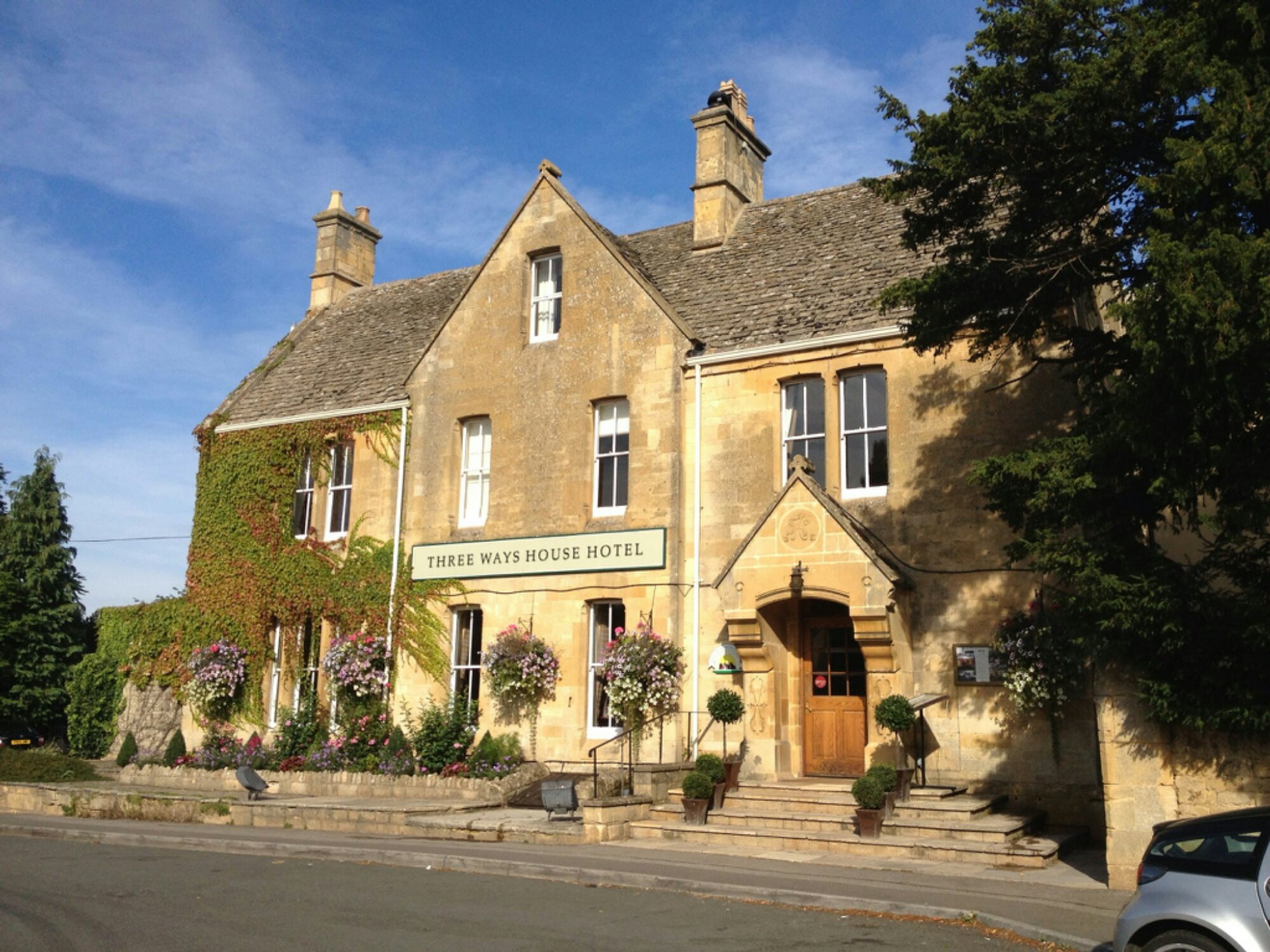
Yesterday we hiked about 10 miles to Mickelton, which took us around the spectacular Meon Hill Fort. It’s easy to imagine Celtic kings scowling down from the heights while their Druids hurled insults and their warriors rolled stones upon enemy armies struggling up the hill. We spent the night at the Three Ways House Hotel and Pudding Club. I kid you not. The ale (Hooky) was quite nice, as were the puddings.

Continue reading

Merrie Olde England

Stratford-upon-Avon.  We start walking tomorrow morning, 10.5 miles to Mickleton.

As for Stratford, well, let’s just say that Helen GA does a more convincing Elizabethan village. And it’s faux Swiss.

I mean, a Subway right down from Shakespeare’s house???? You’d have thought that the town fathers (and mothers?) would have gone to any length to have preserved this place just like Will left it.

image

So we abandoned downtown and hiked over to Anne Hathaway’s cottage, stopping on the way at The Bell pub for a Ruddles County ale.  Both were superb.  As we were finishing, the pub keeper sat down for a chat and directions to the Cottage, which turns out to be about a quarter mile away. The Bell met my test for a great local establishment: I may have heard one other American voice in the place.

image

Rick Steves had recommended Anne’s house as an antidote to the hyper-touristy downtown, and it is lovely. The garden is in full bloom and the woods are invested with garden fairies.  Did I mention that Ruddles is an excellent ale? That, and some kind of kids festival from over the weekend.

Merry Old England I

image

Landed on time at LHR, 0725. At 0755,  we were off the plane, through immigration and customs, had our suitcases and were making our way to the Heathrow Express (are you listening, ATL??). At 10:45, we were checking into the Royal Oxford Hotel, which, despite its nondescript appearance and location right above a Korean restaurant, was delightful.  Recommend it highly.

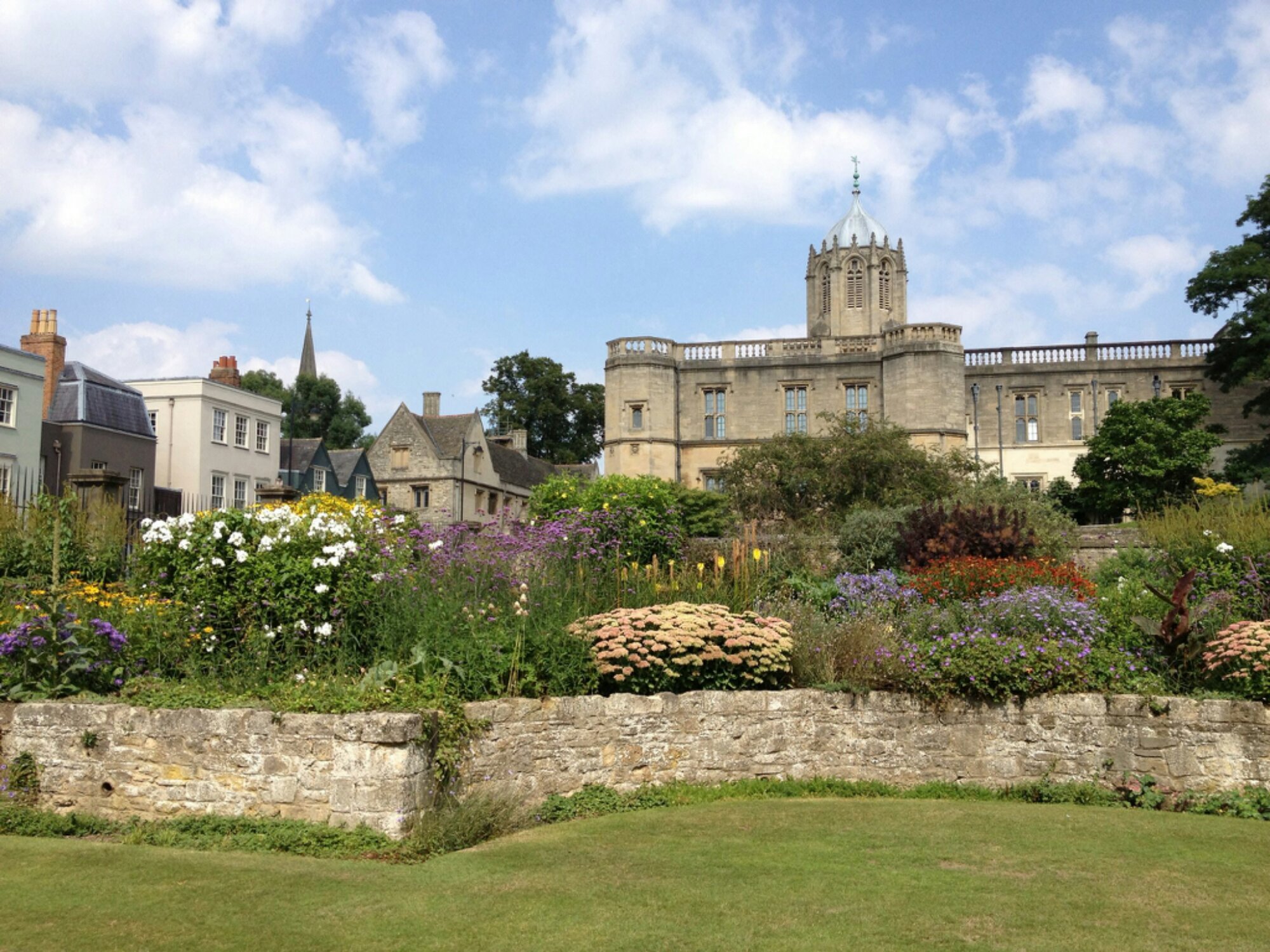
I was also prepared not to like Oxford in general, what with all the PR and reputation, but 5 minutes out of the hotel and I was totally won over. This is the Memorial Garden at Christ Church College.

Spinney on Lind

By now, most of you will have read Bill Lind’s piece on John Boyd that ran in the American Conservative this week. I learned of Bill’s article when Chuck Spinney sent it to his mailing list. Here’s Chuck’s introduction (reprinted with his kind permission):

Most readers of this list should be familiar with the name, if not the ideas, of the late American strategist Col John R. Boyd (USAF ret).  Boyd was my mentor and closest friend, and I am deeply indebted to him for the knowledge he so generously bestowed on me.  While no short essay can capture the entirety of Boyd’s thinking, attached below is an excellent introduction to what some might call John Boyd’s art of war.  It is written by my friend and colleague Bill Lind, a leading contributor to the Military Reform Movement in the 1980s.  Of particular importance is Bill’s concluding point about ‘open systems.’  But you need to understand Boyd’s work to understand the centrality of this point in strategy and grand strategy.

Lind’s essay is very timely, given that Republicans and Democrats alike have driven America into a grand-strategic cul de sac that is weakening our position abroad, while wrecking our democracy at home.  IMO, this grand-strategic trap is a self-inflicted wound and is well summarized by Lind. (Boyd’s criteria for a sensible grand strategy can be found here.)  Hopefully, Lind’s essay will tweak your interest in Boyd’s important work.

Exiting America’s grand strategic mess will not be easy because the Military – Industrial – Congressional Complex and its wholly owned subsidiaries in academia, the thinktanks, the pol-mil apparat, and the mass media have a vested interest in continuing down what has become a clearly a self-destructive evolutionary pathway.  A parasitical “faction” is now exploiting the interplay of chance and necessity to benefit itself at the expense of the “whole.”  Boyd’s ideas — particularly those relating to his moral design for grand strategy — offer a way to begin thinking about how to get off this pathway and return to one where the interplay of chance of necessity leads more naturally to salutary growth at home and abroad.

If you are not familiar with Boyd and his ideas, my advice is to start with Robert Coram’s superb biography, (about 100,000 sold and still in print).  It is by far the best general introduction to the man and his work.  Those interested in heavier lifting can dive into James Fallows’Chet Richards,’ and Franz Osinga’s analyses of Boyd’s strategic thought.  For the truly masochistic, a complete compendium of Boyd’s briefings slides can be downloaded from this link.  But beware, these briefings are long, albeit highly condensed, idiosyncratic, and a bit didactical.  Nevertheless, determined readers will find their study to be infinitely rewarding, because like the writing of Sun Tzu, their essence is one of ever expanding timelessness.

Chuck Spinney
Cannes, France

Chuck and I have edited all of Boyd’s briefings, and the latest versions of these are available on our Articles page. The link that Chuck provides will take you to the Boyd archive at DNIPOGO, where you can also find pdf’s of the original charts in all their typewritten glory.

New Edition of Path to Victory

My good friend and colleague, Don Vandergriff, Major, US Army, ret., has put his time in Afghanistan to good use. He writes:

I am proud to announce the availability of Path to Victory (2nd Edition), forward by Doug MacGregor (COL, USA, ret.).

A revised 2nd Edition of Path to Victory is available with two new chapters and updated information. I worked on it over the last six months at night while here in Afghanistan.

The Path to Victory is available now as a Kindle book on Amazon.  I hope to have paperback copies available in the next week or so.

Note that because it’s ~650 pages in the paperback form, Path to Victory will be priced at $24.99 (paperback) and $16.99 (Kindle).

The Path to Victory:  http://www.amazon.com/The-Path-to-Victory-ebook/dp/B00EHV3ADW/

Thanks, Don

Don published the original, The Path to Victory — America’s Army and the Revolution in Human Affairs, in 2002. It was a seminal text not only for the Army but for anyone looking for ways to make large organizations work better. I’m anxiously looking forward to reading this version.

Tipping: The Aussies weigh in

James Fallows posted a comment on tipping from a reader in Australia:

We do not tip in Australia. We find it demeaning to the tipper and the tippee. We have a relatively egalitarian society (compared to the US), and social safety nets that preserve the dignity of the poor, the sick, the hapless and the downtrodden. Yet we are an aggressive capitalistic society, like the US. Why then, are there these differences?

Tipping, to us, is an insult. It insults our egalitarian core. It reminds us that we once were servants to undeserving masters. We have abandoned this relationship, and I can assure your readers, that levels of service (eg in restaurants), in Australia, are not seriously diminished by the lack of tipping.

I agree with Fallows’s assessment — that this certainly rings true — but the real point is not tipping, per se. It’s orientation, or rather orientation lock.